For men · Facial treatments

Thread lift for menin Berlin-Prenzlauer Berg

Tightening without an incision, and without the face becoming softer. In men the threads are laid flatter and pulled backwards along the jaw — the contour becomes sharper, not higher.

Please note: A medical consultation is a chargeable service under the German physicians’ fee schedule (GOÄ). Online bookings are binding; the practice team will explain the expected consultation fee when arranging your appointment.

Medically reviewed by Dr. med. Juliane C. Finke and Dr. med. Stephan Frantzen · Board-certified plastic surgeons · Last reviewed:

Thread lift for men in Berlin – man in his middle years with lines on the face
45–60 minutes treatment time, usually under local anaesthetic
Day case no hospital stay – you go straight home
2–3 days social downtime, rarely more; small treatments presentable at once
6 months – 1.5 years duration, depending on the threads used
The principle

What a thread lift actually does

A thread lift is tightening without an incision: absorbable threads are introduced under the skin through a fine needle, lift the tissue immediately, and stimulate the body's own collagen production over the following months. The threads dissolve — the tightening effect outlasts them for a while.

We use PDO threads (polydioxanone) by Croma – the same material used for surgical sutures, which has been used in surgery for decades and is broken down by the body into water and carbon dioxide.

The second, slower effect is the more interesting one. As the material dissolves, the surrounding tissue reacts by laying down new collagen along the track of the thread. That is why the result often looks better at three months than at three days.

Materials

Three kinds of thread, three purposes

Which thread is used depends on whether the aim is to lift or to firm:

  • Barbed threads – fine barbs grip the tissue and hold it in its new position. These are the lifting threads, used along the jawline and mid-face.
  • Twisted threads – give volume and firmness along their length; used for finer areas and to support the lift.
  • Smooth threads – no lifting effect, purely collagen stimulation. Used for skin quality, for instance on the neck or the upper lip.

Typical regions in our practice: the jawline, jowls, marionette lines, nasolabial folds and the fine lines around the mouth.

Most treatments combine two of the three. How many threads are needed depends on the tissue: heavier tissue needs more anchor points, and a plan made without examining you is not worth much.

The procedure

What happens on the day

The vectors — the directions of pull — are drawn on while you sit upright. That marking is the part that decides the result; the rest is execution.

The entry points are numbed with local anaesthetic. The threads are then introduced through a fine cannula, positioned, and drawn tight so the tissue moves to where it was marked. The ends are trimmed under the skin; there is nothing to remove afterwards.

The whole appointment takes 45 to 60 minutes. You can see the effect immediately in a mirror — and while you are still on the couch, which means you can say if you want more or less.

From consultation to follow-up

How does a thread lift treatment proceed?

In a personal consultation we develop an individual treatment plan with you – maximum success with minimum effort.

01

Consultation & planning

Together we form a picture of the findings and draw up a treatment plan tailored individually to you. There are almost countless ways of placing threads in the face – the choice is the decisive step.

02

The treatment

The procedure takes around 45–60 minutes and is performed under sterile conditions with local anaesthetic – a general anaesthetic is not necessary. On request, sedation with circulatory monitoring is possible; afterwards you should arrange to be collected.

03

Immediately afterwards

You can go straight home. Small treatments such as wrinkle corrections can often be carried out at the first consultation – afterwards you are usually presentable again immediately and can go to work.

04

Follow-up

All patients are checked regularly – for up to a year after the treatment; this is the only way to maintain high treatment standards. Depending on the extent of the treatment and the type of threads, we recommend a break from sport of up to 14 days; after larger procedures, no dental treatment or lymphatic drainage of the face for about three weeks.

The result

Two effects — one now, one later

Immediately: the mechanical lift. Visible the moment the threads are tightened, though partly masked by swelling for the first two or three days.

Over months: the collagen response. New collagen forms along the thread tracks over eight to twelve weeks, firming the tissue independently of the lift itself. This part is subtle and cumulative, and it is why the result at three months is usually the best one.

Duration is six to eighteen months depending on the material and on your tissue. Repeat treatments tend to last longer, because the collagen laid down by the first round does not disappear when the threads do.

Honest limits

Thread lift or facelift?

A thread lift repositions tissue. It does not remove skin. That single sentence draws the line.

Where the excess of skin is small and the contour has only started to slip, threads do the job with no incision, no hospital and two to three days of downtime. Where there is genuinely too much skin, a thread only gathers it somewhere else — and the result looks pulled rather than lifted.

We will tell you which side of that line you are on. If the answer is a facelift, we say so rather than selling you two rounds of threads first. Equally, many patients use threads to postpone surgery by several years, and that is a perfectly good plan.

Safety

Risks specific to thread lift

Possible complications include pain, bruising, swelling, infection, asymmetry, dimpling, contour irregularity, palpable or visible threads, extrusion or migration, altered sensation and injury to nerves or vessels. Results vary and may be short-lived; removal, correction or another procedure can be necessary.

At a glance

A thread lift: the key facts

Key facts about a thread lift at Finke & Frantzen in Berlin
How long45–60 minutes, usually under local anaesthetic
AnaestheticLocal anaesthetic at the entry points – you are awake
StayDay case – no hospital, you go straight home
Back to workAbout 2 days; small treatments are presentable at once
Duration6 months to 1.5 years, depending on the threads used
ThreadsPDO threads (polydioxanone) by Croma – smooth, twisted or barbed
AftercareNo sport for up to 14 days depending on the extent and thread type, no sauna for two weeks, sleep on your back
Follow-upRegular check-ups for up to a year
WhereDay surgery at our practice, Heinrich-Roller-Straße 15, Berlin-Prenzlauer Berg
Paid byPrivate fee, billed according to the German scale of medical fees (GOÄ)

What does an a thread lift cost? There is no flat rate. Time in theatre, technique, anaesthetic and the extent of the procedure differ from person to person. You get a binding quote at the end of your consultation — in writing, with nothing hidden.

Will insurance pay? As a rule, no: purely aesthetic procedures are paid privately. German statutory insurers only contribute where a medical indication is recognised; private insurers and international policies decide case by case. We will tell you honestly whether you have any prospect of cover. And the consultation itself? Medical advice is a treatment in its own right and is invoiced under the German scale of medical fees (GOÄ) — including when you decide against a procedure afterwards. We tell you what to expect when the appointment is made.

Preparing

How do I prepare?

  • Stop blood thinners – including fish oil and vitamin E supplements – a few days beforehand after checking with us. It makes a real difference to bruising.
  • Avoid alcohol the day before.
  • Come without make-up; we clean and disinfect the skin before treating.
  • Do not book the appointment right before an important event. Swelling and small bruises are normal and need a few days.
  • Tell us if you have a vaccination, dental work or an infection coming up – we would rather postpone.

These points apply generally. What applies in your case – with existing conditions or regular medication – we go through at your pre-operative consultation. That conversation is what counts.

Alternatives

What are the alternatives?

A thread lift is the smallest of the tightening measures. We look first at whether something smaller would do the job – and we will say so if none of these procedures fits your finding.

  • Wrinkle treatment – treats individual lines and lost volume rather than the contour.
  • FaceTite – tightens from beneath with radiofrequency and lasts longer.
  • Facelift – where the excess of skin is genuine, a thread only moves it somewhere else.
In men

What makes a thread lift in men different

Same threads, different direction of pull. In a thread lift it is not the material that decides the result but where the tissue is drawn to — and that is exactly where men and women differ.

The pull goes backwards, not upwards. In women the mid-face is often lifted diagonally upwards; that opens the eyes and softens the face. In a man the same vector would round the cheek and feminise the face. We therefore lay the threads flatter and pull backwards along the jawline — the contour becomes more defined, not higher.

It takes more threads. Male skin is thicker and heavier, and the subcutaneous fat is firmer. To produce a visible effect we generally place more threads than in a woman with a comparable starting point.

The beard complicates the entry points. We choose them so that they fall outside the beard line wherever possible, and so that shaving is unproblematic within a few days.

All of this is discussed in the practice's dedicated men's clinic — a consultation slot reserved for male patients, where the subject can be raised without an audience.


In safe hands

Your specialists for thread lifting in Berlin

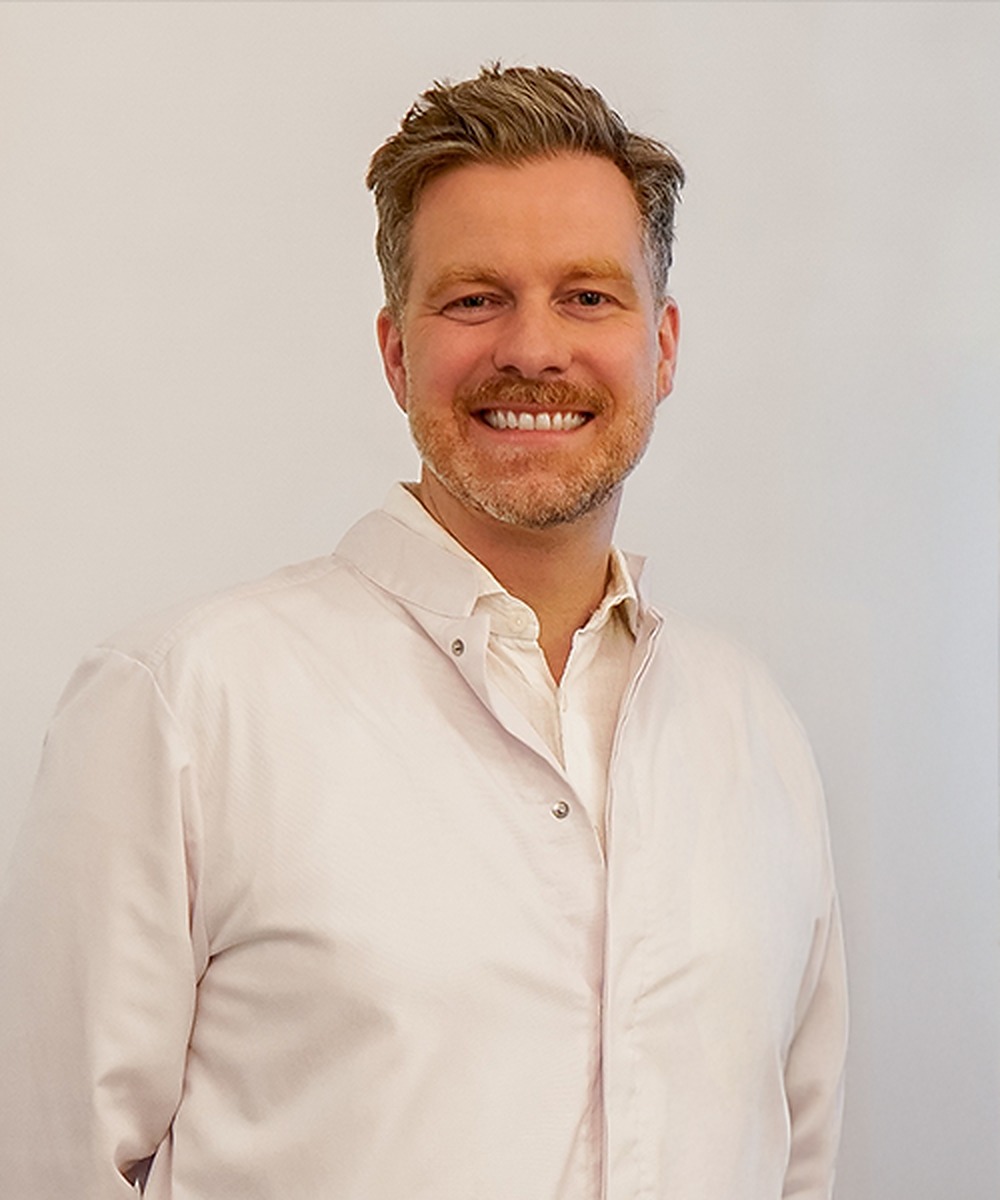
Portrait of Dr. Stephan Frantzen, board-certified plastic surgeon in Berlin

Dr. Stephan Frantzen

Board-certified plastic surgeon and
board-certified general surgeon

  • Head of department for plastic surgery, Helios Klinikum Berlin-Buch, 2015–2018
  • Board-certified in two specialties – general surgery and plastic surgery
  • Speaker on the “Full Face Approach” at the VDÄPC annual meeting
Portrait of Dr. Juliane C. Finke, board-certified plastic surgeon in Berlin

Dr. Juliane C. Finke

Board-certified plastic surgeon (plastic &
aesthetic surgery), Fellow of EBOPRAS

  • Fellow of EBOPRAS – European board examination, 2010
  • Facial treatments with an emphasis on natural, unforced results
  • Consultations in English and Spanish
Verifiable qualifications

Professional societies and awards

jameda award: patients rated Dr. Frantzen 1.0, highest recommendation for breast augmentation – open Dr. Frantzen's jameda profile jameda seal TOP 10 (01/2022): Dr. med. Juliane C. Finke, physicians for plastic & aesthetic operations in Berlin – open Dr. Finke's jameda profile

Dr. Juliane C. Finke and Dr. Stephan Frantzen are full members of the German Society of Plastic, Reconstructive and Aesthetic Surgeons (DGPRÄC) and the German Society of Senology (DGS). Dr. Finke is also a Fellow of EBOPRAS and passed the European board examination in 2010; Dr. Frantzen operates on a voluntary basis for INTERPLAST in South America. The jameda seals lead to the independent physician profiles with patient reviews of Dr. Finke and Dr. Frantzen.

Frequently asked questions

Frequently asked questions about thread lifts

Medically reviewed by Dr. Juliane C. Finke and Dr. Stephan Frantzen

01

Who is a thread lift suitable for — and who not?

It works well between roughly 30 and 60, where the contour has started to slip but the excess of skin is still modest. It does not work where skin genuinely hangs: a thread repositions tissue, it does not remove it. In that case a facelift is the honest answer and we will say so.

02

Is a general anaesthetic needed?

No. We work under local anaesthetic at the entry points; you are awake and can look in the mirror while the threads are being tightened. That is an advantage, not a compromise — you get a say in how far it goes.

03

Does it hurt?

The local anaesthetic stings briefly. After that you feel pulling and pressure rather than pain. A feeling of tightness for a few days afterwards is normal and settles.

04

When can I go back to work?

Usually after two to three days, rarely more. Small treatments are presentable straight away; larger ones may leave slight swelling or a small bruise at an entry point.

05

Do the threads have to be removed?

No. They dissolve completely over months and are broken down into water and carbon dioxide. The materials are the same ones used for surgical sutures.

06

Can the threads be seen or felt?

Not once healed. In the first two weeks you may feel a slight tightness or, occasionally, a small irregularity where a thread sits; both settle. If something does stay visible, it can be corrected.

07

How long does it last?

Six to eighteen months, depending on the material and your tissue. Repeat treatments generally last longer, because the collagen from the first round remains.

08

Is a compatibility test needed?

No. The materials have been used in surgery for decades and allergic reactions are not a recognised problem with them.

09

Which threads do you use?

PDO threads (polydioxanone) by Croma – smooth, twisted or barbed, depending on the aim. They dissolve completely. Dr. Frantzen lectures for Croma and trains other doctors in thread lifting.

10

How often will I be seen afterwards?

Regularly, for up to a year after the treatment. The first check is shortly after the procedure; the intervals then follow how you are healing.

11

What should I avoid afterwards?

No sport for up to 14 days depending on the extent of the treatment and the thread type, no sauna or steam for two weeks, sleep on your back for the first few nights, and avoid rubbing the area hard when washing. Extreme facial expressions are worth avoiding for a week.

Your next step

Talk to us man to man

Book an appointment in the men's clinic. Dr. Frantzen has taught thread lifting at the University Dermatology Clinic in Tübingen and will tell you plainly whether threads are the right answer for you.

Related treatments: Wrinkle treatment · FaceTite · Facelift · Facial treatments

Medically reviewed by Dr. Juliane C. Finke, board-certified plastic surgeon (plastic, reconstructive and aesthetic surgery), and Dr. Stephan Frantzen, board-certified plastic surgeon and board-certified general surgeon.
Last medically reviewed:
The content of this page is for general information and does not replace medical advice. A binding assessment is only possible after a personal examination.

Independent information: The German Society of Plastic, Reconstructive and Aesthetic Surgeons provides patient information on choosing a specialist, consent, limitations and possible complications. The German Medical Association explains the GOÄ fee schedule. These German-language sources supplement, but do not replace, an individual medical examination.

Call us Book an appointment