For women · Body contouring

Tummy tuckin Berlin-Prenzlauer Berg

After pregnancy or marked weight loss, the abdominal wall often does not go back. Skin that has been overstretched has no way of retracting, and separated abdominal muscles do not close on their own. A tummy tuck removes the excess and repairs the muscle layer underneath.

Please note: A medical consultation is a chargeable service under the German physicians’ fee schedule (GOÄ). Online bookings are binding; the practice team will explain the expected consultation fee when arranging your appointment.

Medically reviewed by Dr. med. Juliane C. Finke and Dr. med. Stephan Frantzen · Board-certified plastic surgeons · Last reviewed:

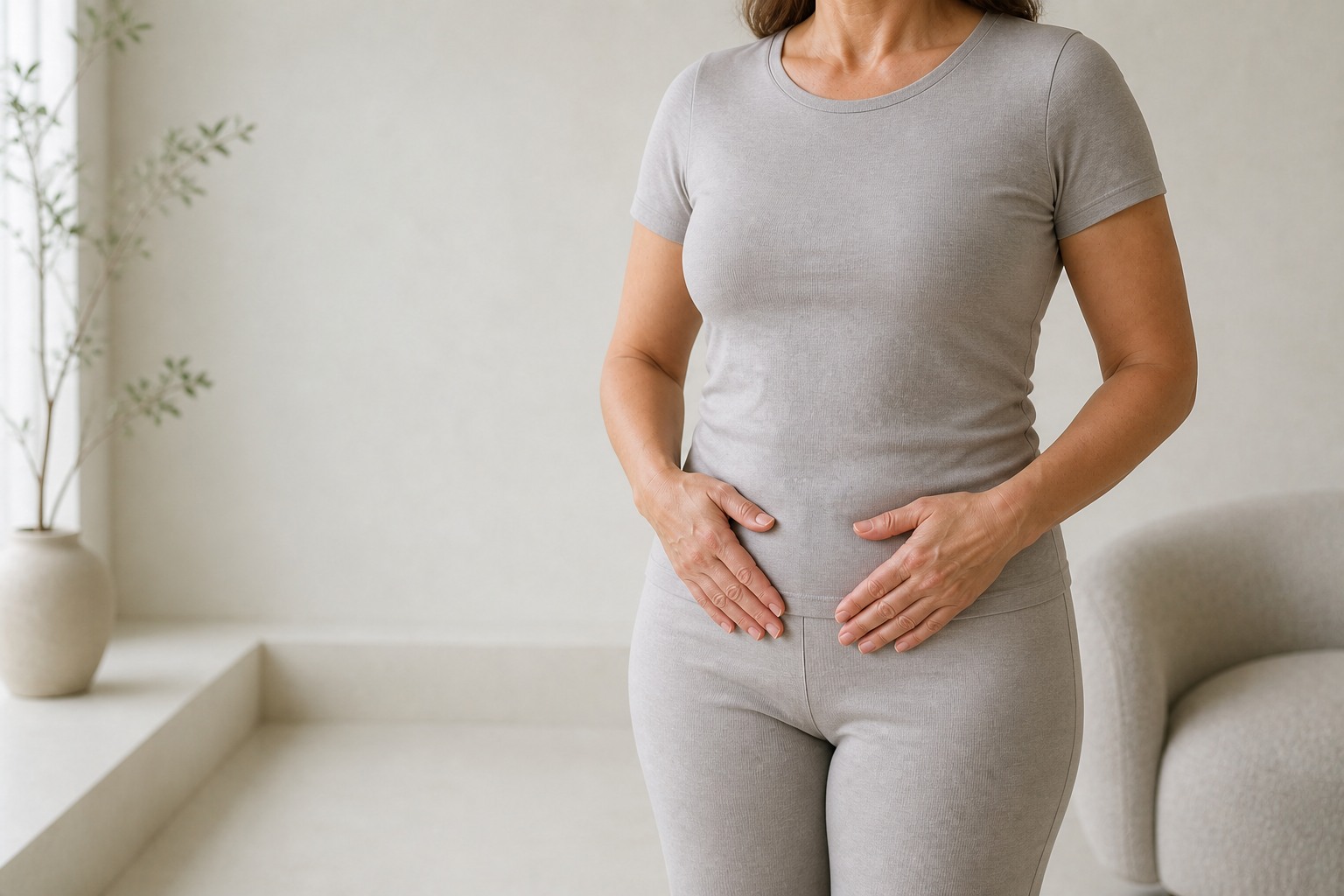
Tummy tuck in Berlin – adult woman resting both hands gently on her lower abdomen
1.5–4 hours classic 1.5–2.5 hours, extended up to 4
General anaesthetic inpatient – usually one to two nights in hospital
7–10 working days plan to be away from work for that long
6 weeks no sport, nothing heavier than 10 kg, compression garment
Indication

When does a tummy tuck help — and when does it not?

A tummy tuck — medically an abdominoplasty — removes excess skin and fat from the lower abdomen and, where needed, brings the separated straight abdominal muscles back together. What it tightens is the abdominal wall itself, not the contents behind it.

It helps where skin has been stretched beyond its capacity to recover: after one or more pregnancies, after losing 20 kilograms or more, sometimes simply with age and a difficult connective tissue. The tell-tale sign is skin that folds over the lower abdomen and does not spring back when you let go.

It does not help where the abdomen is firm and pushes forward from within. That is visceral fat, sitting between the organs, and no operation on the abdominal wall reaches it. We check this by feel in the first consultation, and we say so plainly when it applies.

Techniques

Mini, classic or extended?

Three variants, chosen by how much skin has to go:

  • Mini abdominoplasty – only the skin below the navel. Short scar, navel stays where it is. Suitable when the excess is genuinely small.
  • Classic abdominoplasty – skin from the navel to the pubic area is removed, the navel is repositioned through a new opening. Transverse scar in the bikini line. The standard operation.
  • Extended (fleur-de-lis) – a vertical scar is added to the transverse one, for very large excesses, typically after major weight loss. More scar, but the only way to take up width as well as length.

Which one applies is decided by examination, not by preference. We show you the expected scar on your own abdomen with a marker before you decide anything.

Muscle repair

Diastasis recti — the part that is not about skin

During pregnancy the two straight abdominal muscles separate at the midline to make room. In many women they come back together; in some they stay apart. That is a diastasis recti, and it is why an otherwise slim woman can still have a rounded lower abdomen that no amount of core work flattens.

You can test it yourself: lying on your back, lift your head slightly and press your fingers into the midline above and below the navel. A gap of more than about two fingers’ width that ridges upwards when you tense is a diastasis.

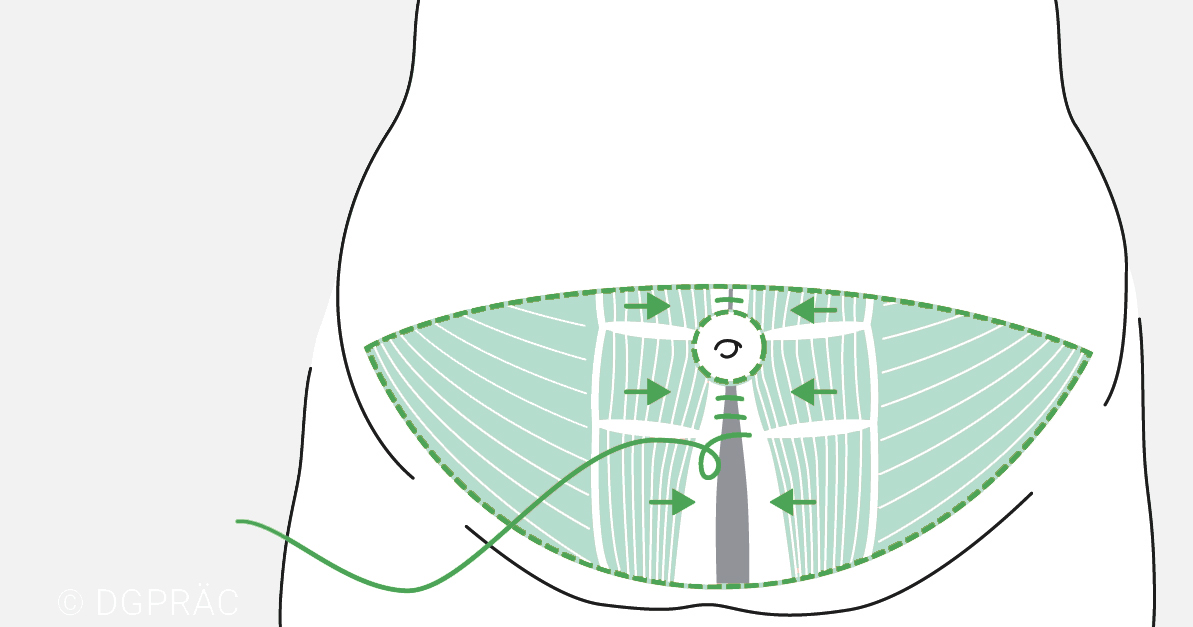
Repairing it is part of the operation, not an extra: the muscle sheath is drawn back to the midline with a running suture. That is also the reason for the six-week limit on lifting — the repair needs that time to hold.

Step by step

From planning to the scar

From planning through the muscle repair to the scar — classic and extended.

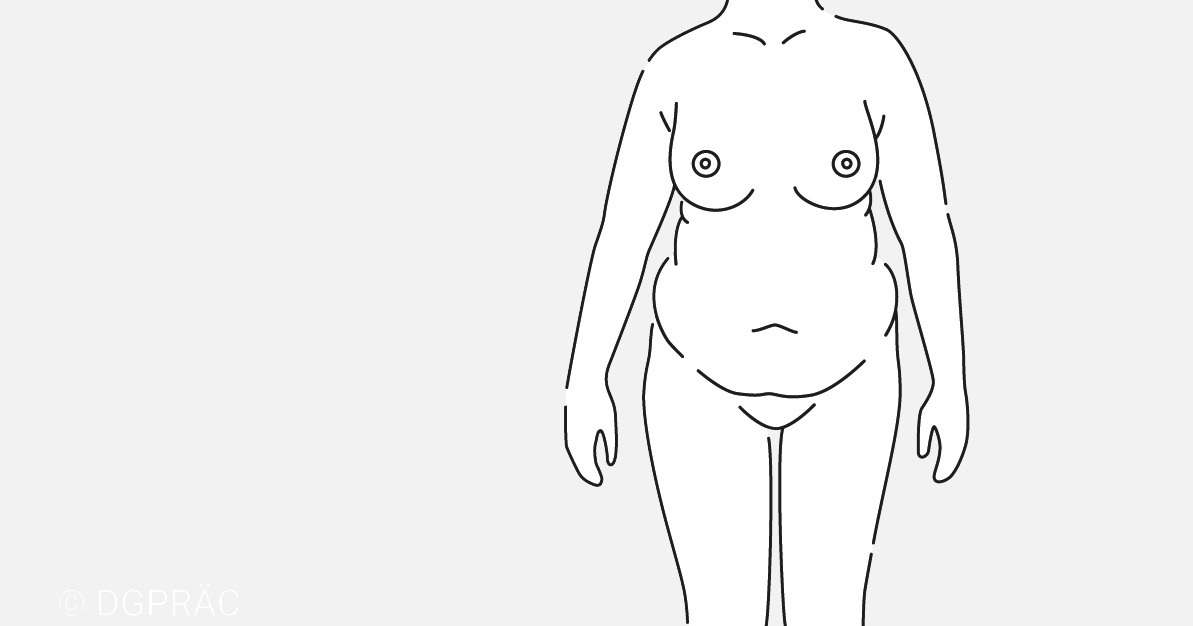
Medical illustration: starting point with an overstretched abdominal wall
1. Starting point: the overstretched abdominal wall hangs forward and the skin no longer retracts on its own.
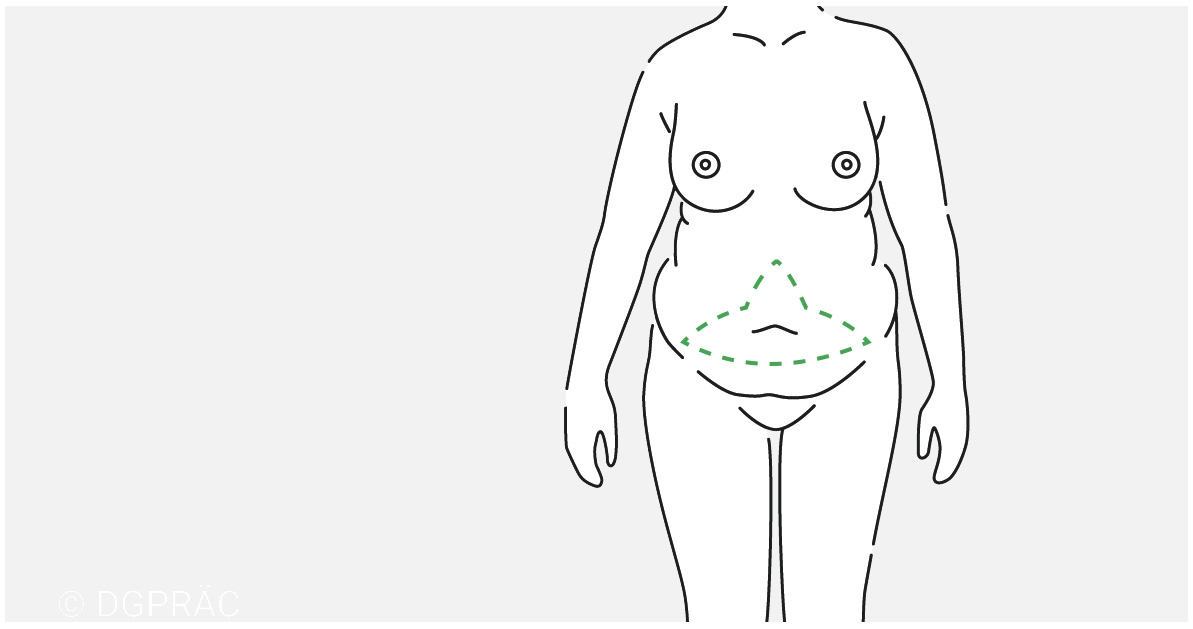
Medical illustration: planning the scar in the lower abdominal crease
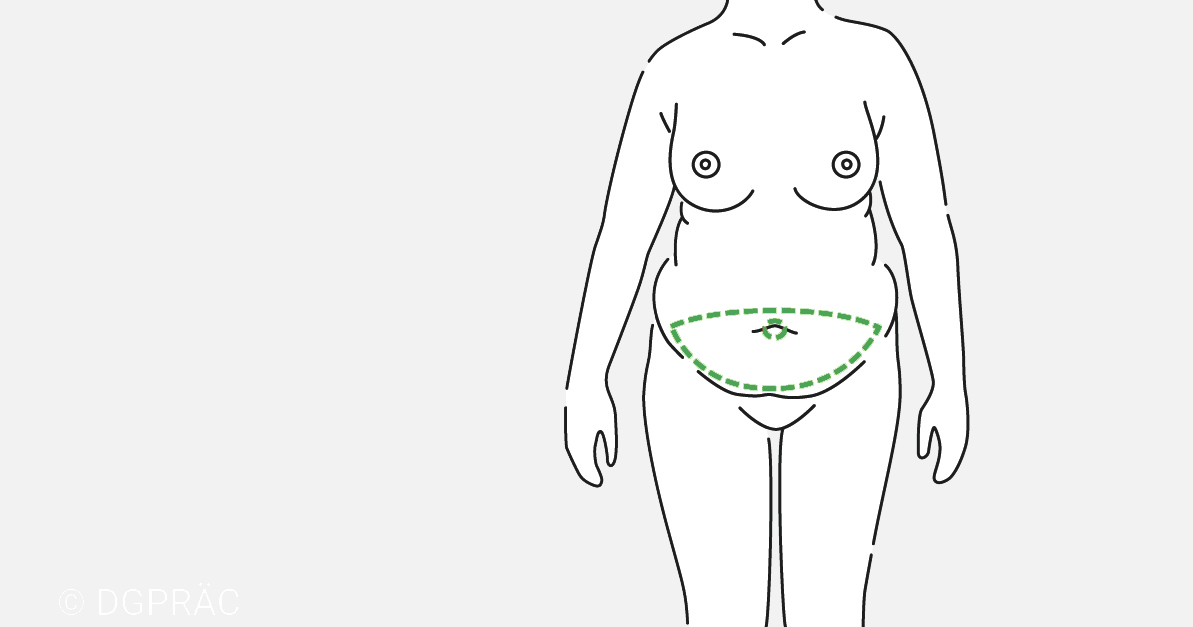
2. Planning: the future scar is drawn into the lower crease and the navel is circumscribed.
Medical illustration: tightening the separated abdominal muscles
3. Muscle repair: the abdominal wall is lifted and the separated straight muscles are drawn back to the midline.
Medical illustration: the abdominal wall is drawn downwards
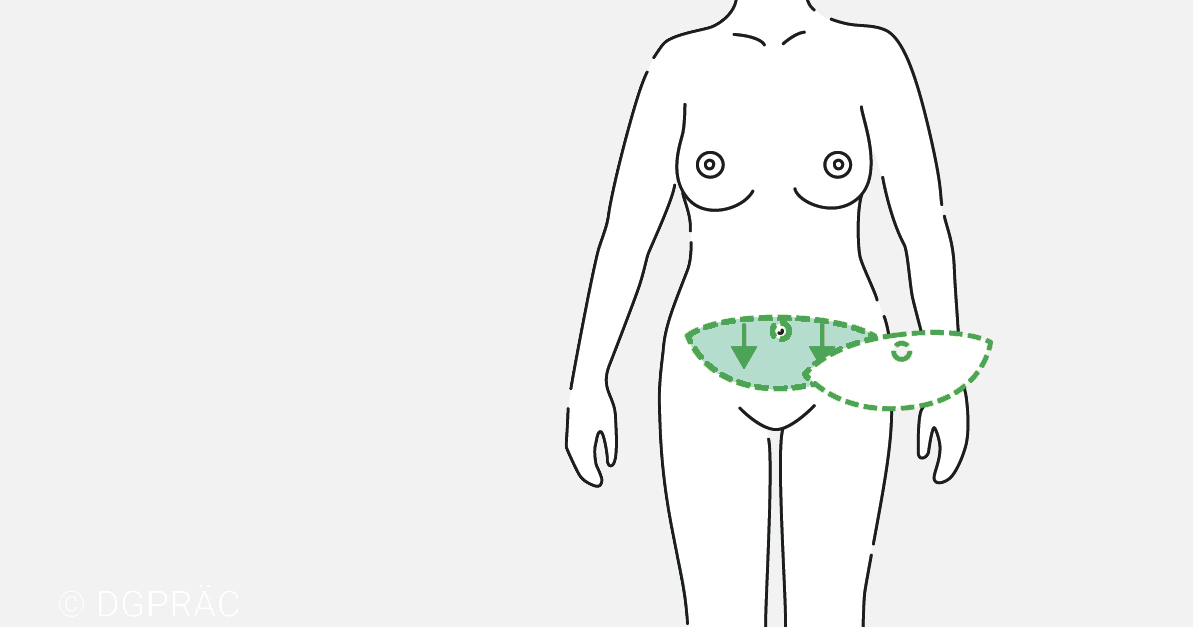
4. Tightening: the abdominal wall is pulled down and the excess skin and fat removed.
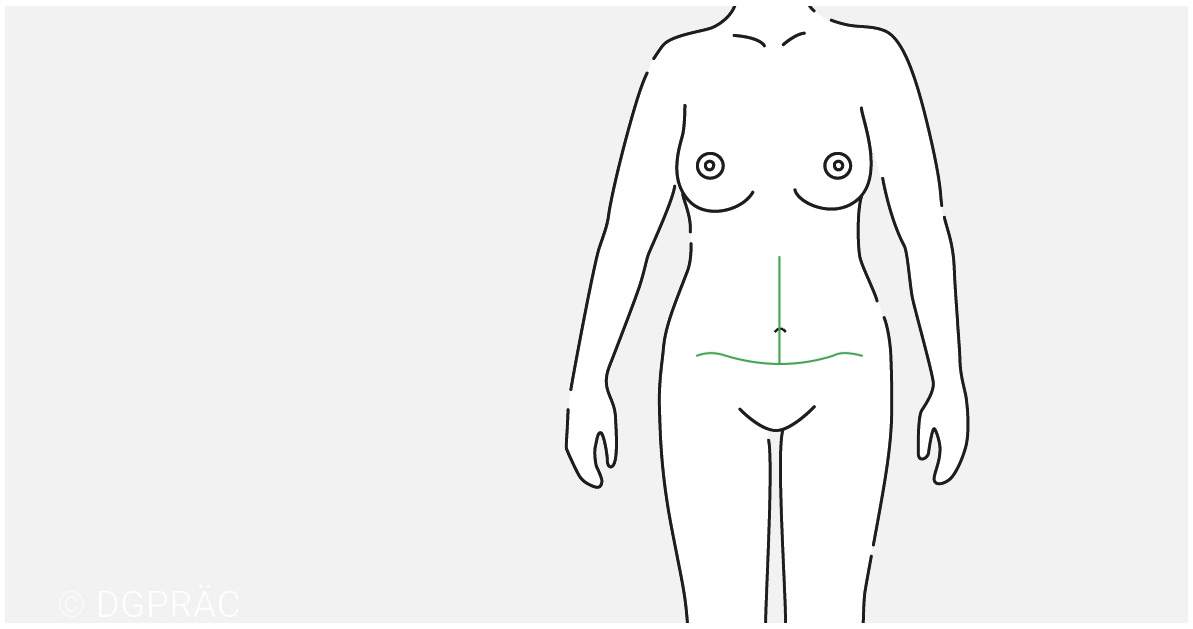
Medical illustration: result after a classic tummy tuck
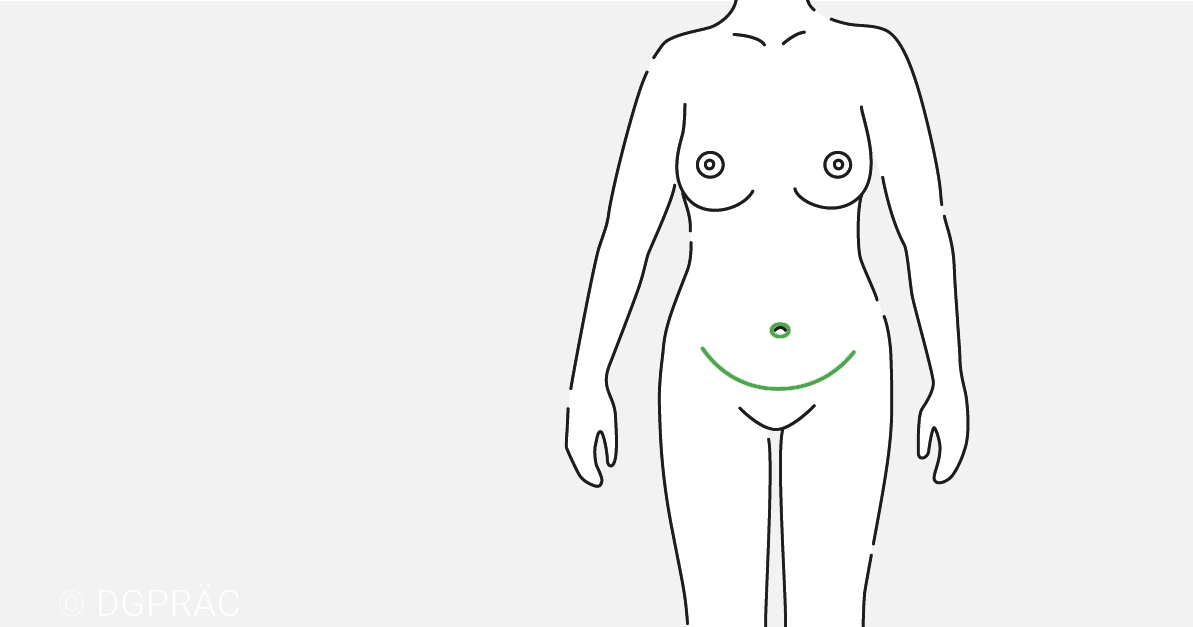
5. Classic result: a transverse scar in the bikini line, the navel repositioned.
Medical illustration: extended tummy tuck with vertical marking
6. Extended technique: with a very large excess of skin a vertical marking is added.
Medical illustration: result after an extended tummy tuck
7. Extended result: the scar forms an anchor, or inverted T (fleur-de-lis). Illustrations: DGPRÄC.
How it works

How your tummy tuck proceeds

The most important step before an abdominoplasty begins is careful planning.

01

Consultation and informed consent

We discuss your options in detail, the surgical technique and the risks involved – and which of the three techniques suits your findings.

02

Marking while standing

With you standing, we mark the future scar line in the lower abdominal crease, the midline, both anterior iliac crests and the circular navel.

03

Marking under anaesthetic

The exact incision line is drawn while you are lying down under anaesthetic. It differs from the later course of the scar, which is why particular care is needed here. Special attention is paid to symmetry.

04

Tightening and muscle repair

Excess skin and fat are removed. In most tummy tucks we also tighten the straight abdominal muscles, which improves the stability of the lumbar spine.

05

Navel and suture

In the classic and extended techniques, the navel is cut around and repositioned. In extensive tightening procedures we use a special gathering suture to keep the scar as short as possible within the bikini line.

06

Inpatient monitoring

A tummy tuck should never be performed as day surgery. Our patients usually stay one to two nights in the clinic; the drain is removed after one to two nights.

The scar

Where will the scar be?

Transverse, low, and long. That is the honest description. In the classic technique the scar runs from hip to hip in the crease above the pubic area, positioned so that it disappears under underwear and most bikini bottoms. We mark it with you wearing what you actually wear.

There is a second, small scar around the navel, which usually fades to near-invisibility. In the extended technique the vertical scar runs up the midline and is visible — that is the trade-off for taking up a very large excess.

Scars are firm and red for several months and fade over one to two years. Silicone tape from around week three, no sun for a year, and no nicotine — those three make more difference than anything we can do in theatre.

Recovery

How the first weeks go

One to two nights in hospital. You will walk on the first day, slightly bent forward — that position is deliberate and protects the suture line. Drains are usual and come out after two to four days.

The compression garment goes on straight away and stays for six weeks. Expect to be off work for seven to ten working days for desk work, longer for anything physical.

Six weeks: nothing heavier than ten kilograms, no sport, no straining. This is the rule patients most often break and most often regret — early tension is the commonest reason a scar ends up wide.

Safety

Risks specific to tummy tuck

Possible complications include bleeding, infection, seroma or lymphatic swelling, wound separation, impaired blood supply or skin loss, conspicuous scars, altered sensation, asymmetry, contour irregularity, thrombosis, pulmonary embolism and revision surgery. Smoking, obesity, diabetes and previous abdominal surgery can increase individual risk.

At a glance

Tummy tuck: the key facts

Key facts about a tummy tuck at Finke & Frantzen in Berlin
How long1.5–4 hours – classic 1.5 to 2.5, extended up to 4
AnaestheticGeneral anaesthetic
Stay1–2 nights as an inpatient
Back to work7–10 working days for desk work, longer for physical work
Restrictions6 weeks – no sport, nothing over 10 kg, compression garment
ScarTransverse in the bikini line, plus around the navel; vertical as well in the extended technique
WhereConsultation and aftercare at our practice in Berlin-Prenzlauer Berg, the operation as an inpatient at the MEOCLINIC, Friedrichstraße 71 (private hospital in Quartier 206)
Paid byPrivate fee – cover possible where recurring inflammation in the skin fold is documented

What does a tummy tuck cost? There is no flat rate. Time in theatre, technique, anaesthetic and the extent of the procedure differ from person to person. You get a binding quote at the end of your consultation — in writing, with nothing hidden. And the consultation itself? Medical advice is a treatment in its own right and is invoiced under the German scale of medical fees (GOÄ) — including when you decide against a procedure afterwards. We tell you what to expect when the appointment is made.

Will insurance pay? As a rule, no: purely aesthetic procedures are paid privately. German statutory insurers only contribute where a medical indication is recognised; private insurers and international policies decide case by case. We will tell you honestly whether you have any prospect of cover. After major weight loss with repeated inflammation in the skin fold, an application to a statutory insurer is realistic.

Preparing

How do I prepare?

  • Stop blood thinners – aspirin, warfarin, ibuprofen – only after checking with us and your GP, usually ten to fourteen days beforehand.
  • Give up nicotine for two to four weeks before and after surgery. Smoking narrows the small skin vessels and is by far the most common cause of wound healing problems.
  • Come fasted on the day: nothing to eat for six hours, nothing to drink for two.
  • Arrange someone to take you home and, ideally, to stay the first night. No driving for 24 hours after a general anaesthetic.
  • Get things ready in advance: clothes that open at the front, the compression garment we agreed on, and enough food in for a few days.

These points apply generally. What applies in your case – with existing conditions or regular medication – we go through at your pre-operative consultation. That conversation is what counts.

Alternatives

What are the alternatives?

Whether it is skin or volume that bothers you decides the operation. We look first at whether something smaller would do the job – and we will say so if none of these procedures fits your finding.

  • Liposuction – the right choice where the skin is still elastic and only volume is in the way.
  • BodyTite – reduces fat and tightens the skin at once – the middle ground between suction and surgery.
  • Skin tightening overview – the other areas where loose skin can be treated.
In safe hands

Your surgeons for a tummy tuck in Berlin

Portrait of Dr. Juliane C. Finke, board-certified plastic surgeon in Berlin

Dr. Juliane C. Finke

Board-certified plastic surgeon (plastic &
aesthetic surgery), Fellow of EBOPRAS

  • Fellow of EBOPRAS – European board examination, 2010
  • Body contouring after pregnancy and after major weight loss
  • Consultations in English and Spanish
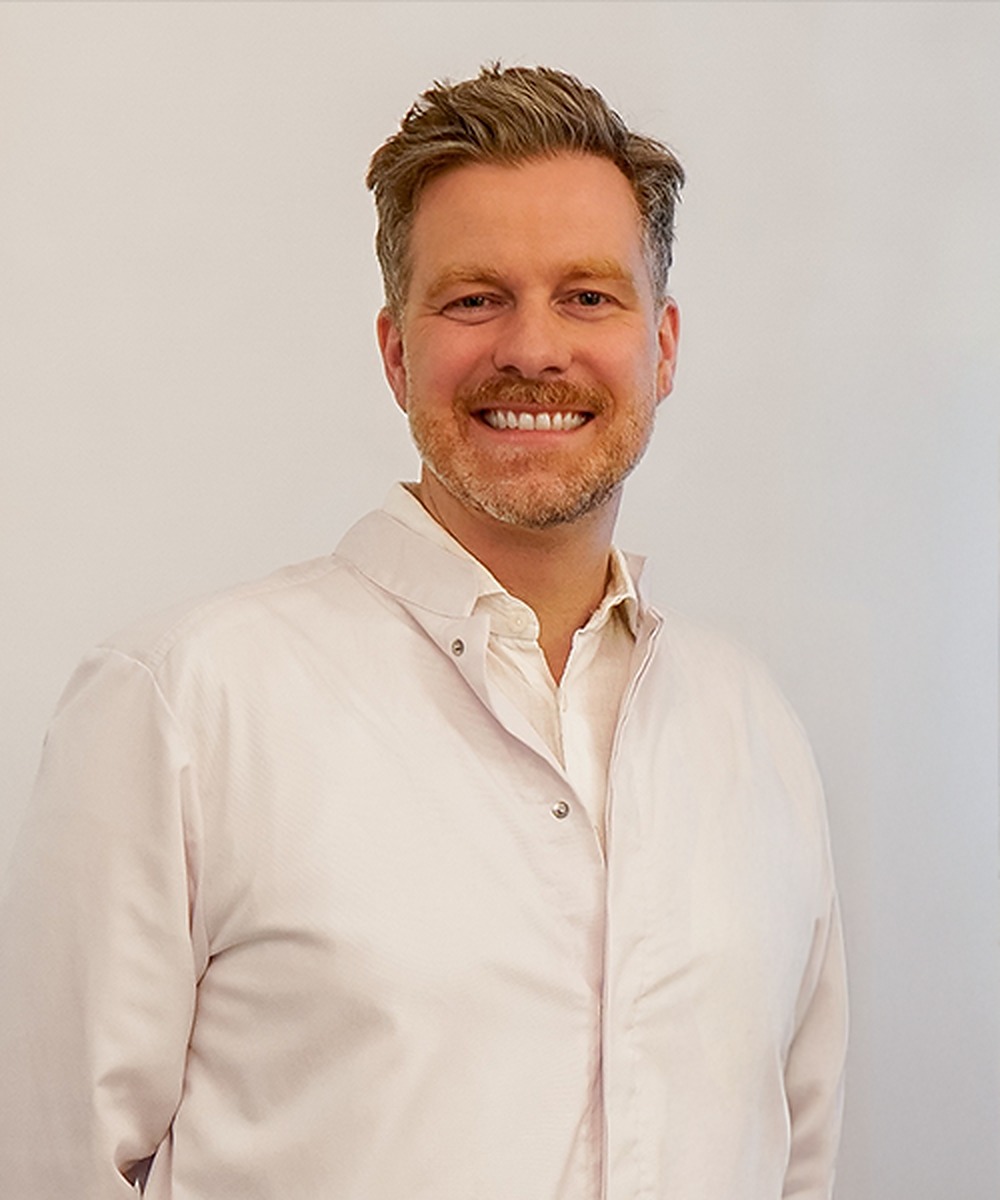
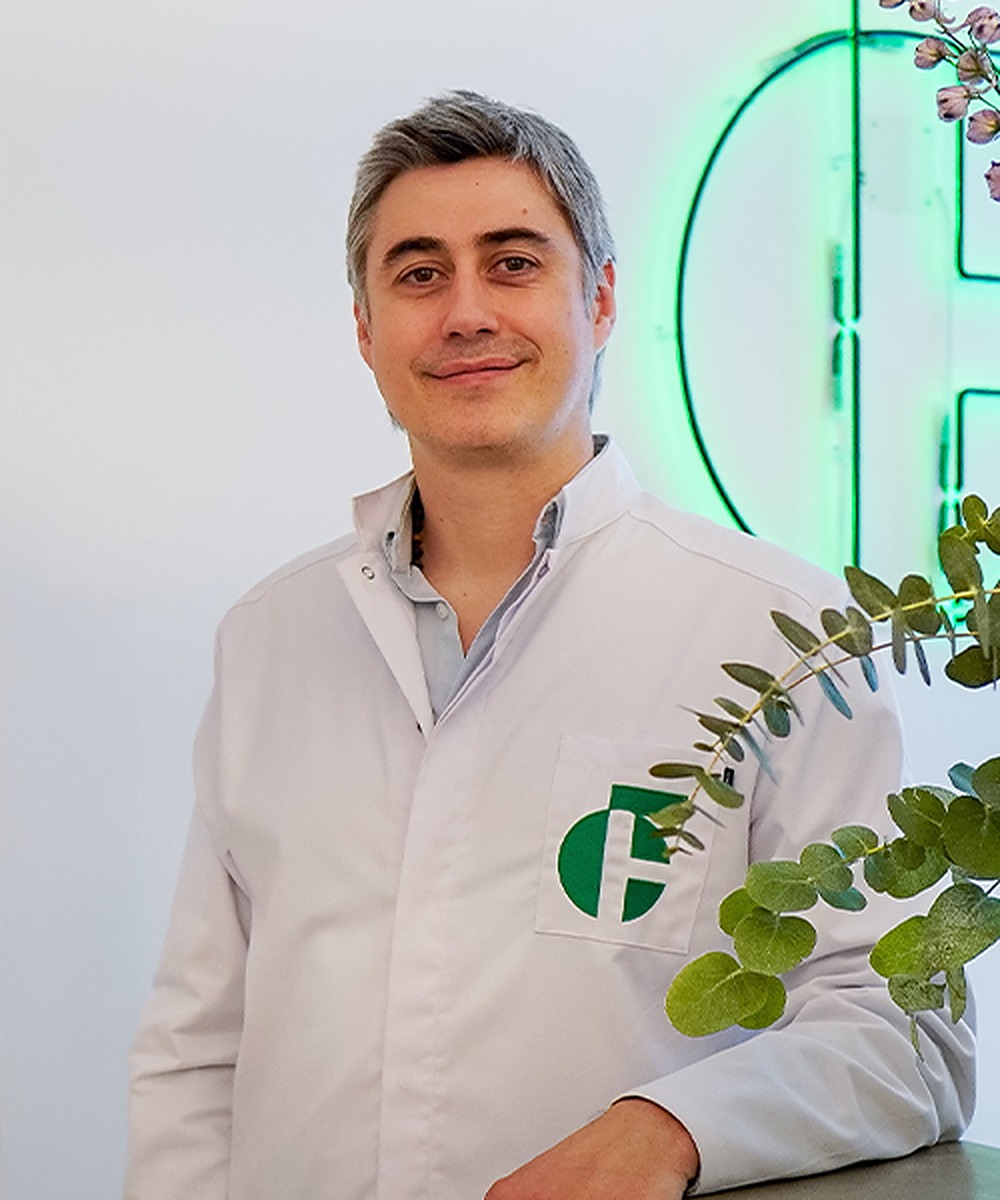
Portrait of Dr. Stephan Frantzen, board-certified plastic surgeon in Berlin

Dr. Stephan Frantzen

Board-certified plastic surgeon and
board-certified general surgeon

  • Head of department for plastic surgery, Helios Klinikum Berlin-Buch, 2015–2018
  • Board-certified in two specialties – general surgery and plastic surgery
  • Abdominal wall repair including diastasis recti and hernia
Portrait of Gustavo Saravia Leguizamon, board-certified plastic surgeon in Berlin

Gustavo Saravia Leguizamon

Board-certified plastic surgeon (plastic &
aesthetic surgery)

  • Board-certified since 2017 – Berlin Medical Council; earlier board certifications in Argentina
  • Lead physician for plastic surgery, Schlosspark-Klinik Berlin, 2023–2025
  • Skin-tightening surgery – performs the tummy tuck personally at our practice; consultations in German and Spanish
Full CV

* employed physician

Verifiable qualifications

Professional societies and awards

jameda award: patients rated Dr. Frantzen 1.0, highest recommendation for breast augmentation – open Dr. Frantzen's jameda profile jameda seal TOP 10 (01/2022): Dr. med. Juliane C. Finke, physicians for plastic & aesthetic operations in Berlin – open Dr. Finke's jameda profile

Dr. Juliane C. Finke and Dr. Stephan Frantzen are full members of the German Society of Plastic, Reconstructive and Aesthetic Surgeons (DGPRÄC) and the German Society of Senology (DGS). Dr. Finke is also a Fellow of EBOPRAS and passed the European board examination in 2010; Dr. Frantzen operates on a voluntary basis for INTERPLAST in South America. The jameda seals lead to the independent physician profiles with patient reviews of Dr. Finke and Dr. Frantzen.

Frequently asked questions

Frequently asked questions about tummy tucks

Medically reviewed by Dr. Juliane C. Finke and Dr. Stephan Frantzen

01

Should I wait until after my last pregnancy?

Yes. A further pregnancy stretches the skin and the repaired muscle again, and you would be paying for the operation twice. If family planning is complete, there is no reason to wait.

02

How much weight will I lose?

Between one and four kilograms of skin and fat in most cases — but that is not the point of the operation and it is not a way to lose weight. Come at a weight you can hold; the result depends on it.

03

Will it get rid of my stretch marks?

The ones on the skin that is removed, yes — and since most stretch marks sit below the navel, that is often a good proportion of them. The ones above the navel stay.

04

Can I have liposuction at the same time?

Often yes, typically on the flanks to blend the contour. Combining extensive liposuction with a full tummy tuck has to be judged carefully, because both affect the blood supply of the same skin.

05

When can I do sport again?

Walking from day one, gentle cardio after about four weeks, abdominal and weight training after six. The muscle repair needs that time — this is the limit worth respecting.

06

Will insurance pay?

Sometimes, after major weight loss, where the skin fold causes repeated inflammation that is documented by a doctor. We help with the paperwork; your insurer decides. A purely aesthetic tummy tuck is paid privately.

07

How long will I be bent over?

Three to five days, then progressively upright. Standing fully straight usually feels comfortable again after about ten days.

08

Where does the operation take place?

Consultation and aftercare at our practice in Berlin-Prenzlauer Berg. The operation is performed as an inpatient at the MEOCLINIC, Friedrichstraße 71 — the private hospital in Quartier 206.

09

What are the risks?

Common and temporary: swelling, bruising, numbness of the skin below the navel, which can last months. Less common: seroma, wound healing problems at the point of most tension, widened scarring. Rare but serious: thrombosis — which is why you are up and walking on day one.

Your next step

Let’s talk about your abdomen

Book a personal consultation. We examine, we test for a diastasis, and we mark the expected scar on you before you decide anything.

Related treatments: Liposuction · BodyTite · Skin tightening · Breast lift · For women

Medically reviewed by Dr. Juliane C. Finke, board-certified plastic surgeon (plastic and aesthetic surgery), and Dr. Stephan Frantzen, board-certified plastic surgeon and board-certified general surgeon.
Last medically reviewed:
The content of this page is for general information and does not replace medical advice. A binding assessment is only possible after a personal examination.

Independent information: The German Society of Plastic, Reconstructive and Aesthetic Surgeons provides patient information on choosing a specialist, consent, limitations and possible complications. The German Medical Association explains the GOÄ fee schedule. These German-language sources supplement, but do not replace, an individual medical examination.

Call us Book an appointment