For men · Facial treatments

Eyelid surgery for menin Berlin-Prenzlauer Berg

Heavy upper lids make a man look tired long before he feels it. The operation is the same one women have — the planning is not, because a man's brow sits lower and has to stay there.

Please note: A medical consultation is a chargeable service under the German physicians’ fee schedule (GOÄ). Online bookings are binding; the practice team will explain the expected consultation fee when arranging your appointment.

Medically reviewed by Dr. med. Juliane C. Finke and Dr. med. Stephan Frantzen · Board-certified plastic surgeons · Last reviewed:

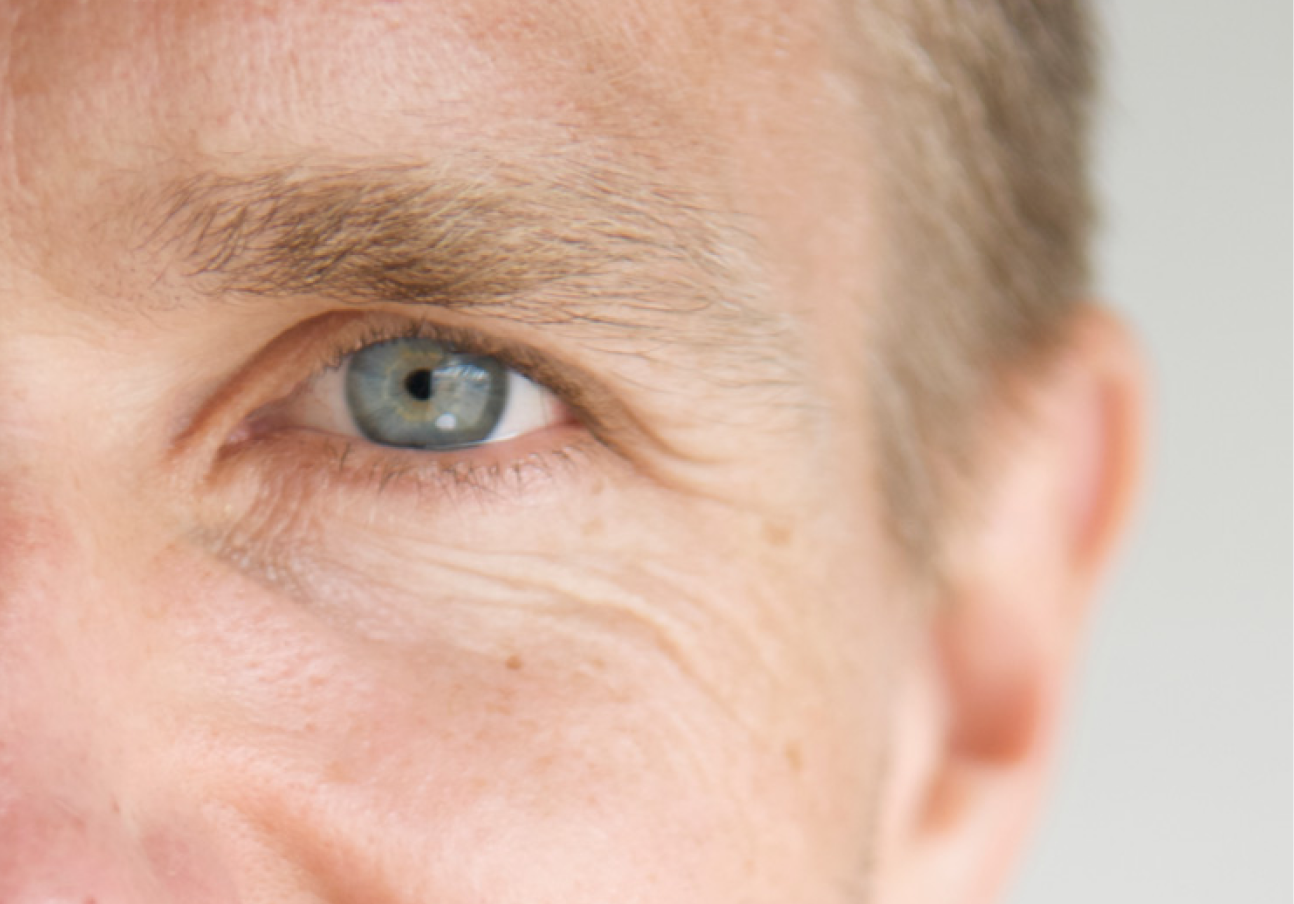
Eyelid surgery for men in Berlin – close-up of the eye area of a man's face
45–90 minutes in theatre, usually under local anaesthetic
Day surgery no hospital stay – you go home after a short rest
Sutures out after 7 days wound check the very next day at the practice
24 hours reachable on a dedicated emergency number
Upper lid

Droopy upper lids — the most common request

Eyelid surgery — medically a blepharoplasty — removes excess skin and, where required, muscle and fat from the upper or lower lid. The aim is an open, rested look, not a changed expression.

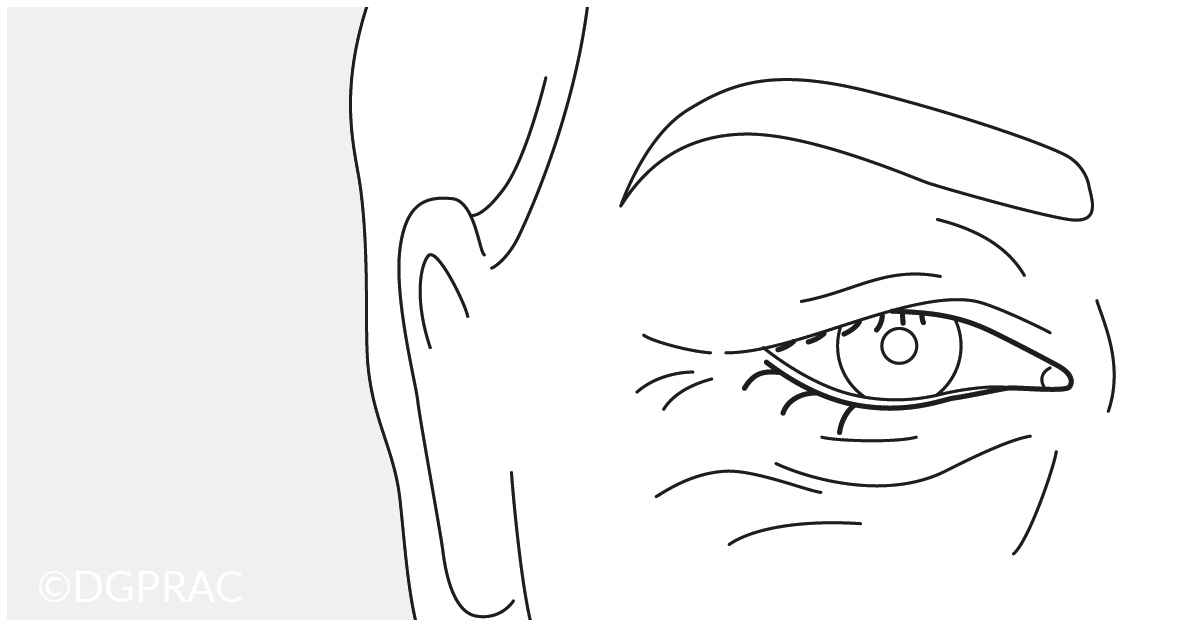
Upper lid skin is the thinnest on the body and it gives way first. When it does, it folds over the lid crease, and in more pronounced cases rests on the lashes. What patients describe is rarely „I look old"; it is „people keep asking if I slept badly", and „my eyeshadow disappears into the fold".

The operation removes a precisely measured strip of skin along the natural crease, sometimes with a small fat pad near the nose. The scar lies in the crease and is invisible with the eye open.

Lower lid

Lower lids: bags, hollows, or both

The lower lid is the more delicate of the two, and the finding matters more than on the upper lid because the treatments differ:

  • Fat bags – the fat that cushions the eye pushes forward as the retaining membrane weakens. The fat is repositioned or reduced, not simply removed.
  • Excess skin – fine crêpey skin below the lashes; a narrow strip is removed through an incision just under the lash line.
  • A tear trough – a hollow between lid and cheek. This is lost volume, and it is often better filled with hyaluronic acid than operated on.

Removing too much from a lower lid is the classic error in this operation — it pulls the lid margin down and gives a rounded, staring look. We are deliberately conservative here, and we would rather do slightly too little.

Step by step

From the finding to the scar

From the starting point through the incision to the course of the scar.

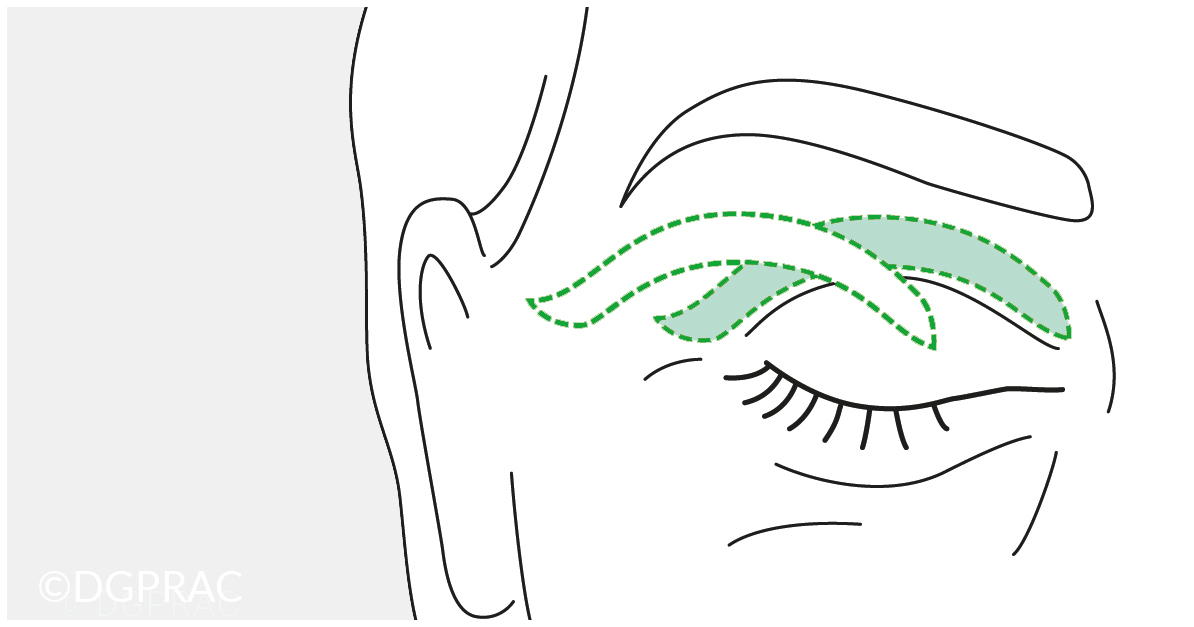
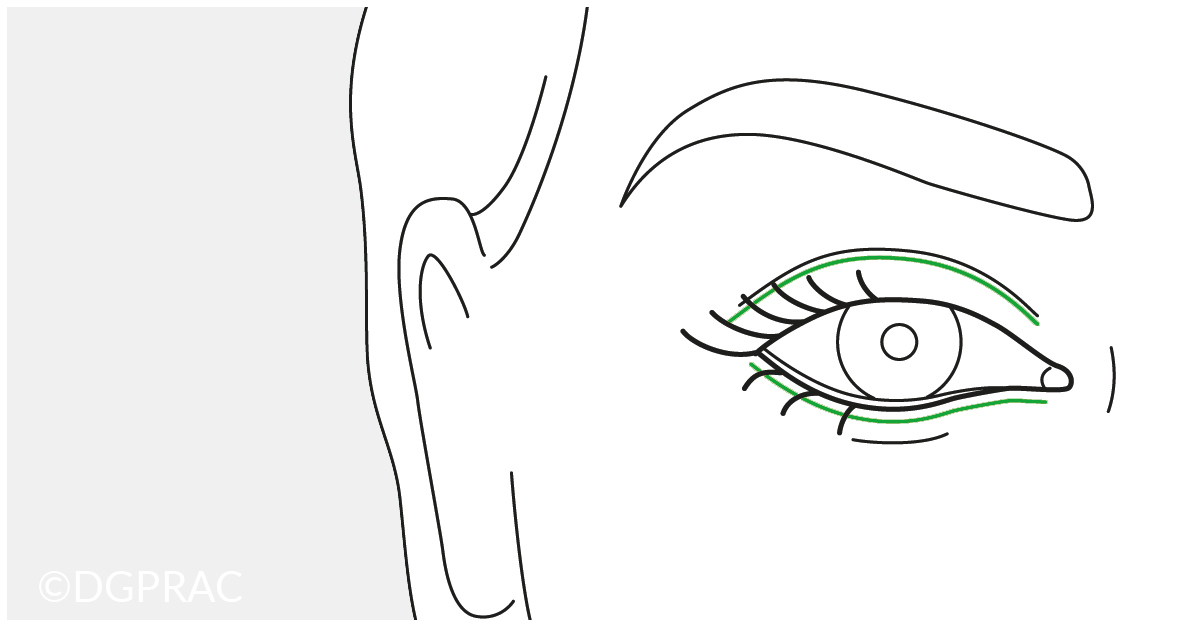
Medical illustration: starting point with excess skin on the upper lid
1. Starting point: pronounced excess skin on the upper or lower lid.
Medical illustration: incision on the upper lid
2. Upper lid: incision along the natural lid crease, excess skin removed.
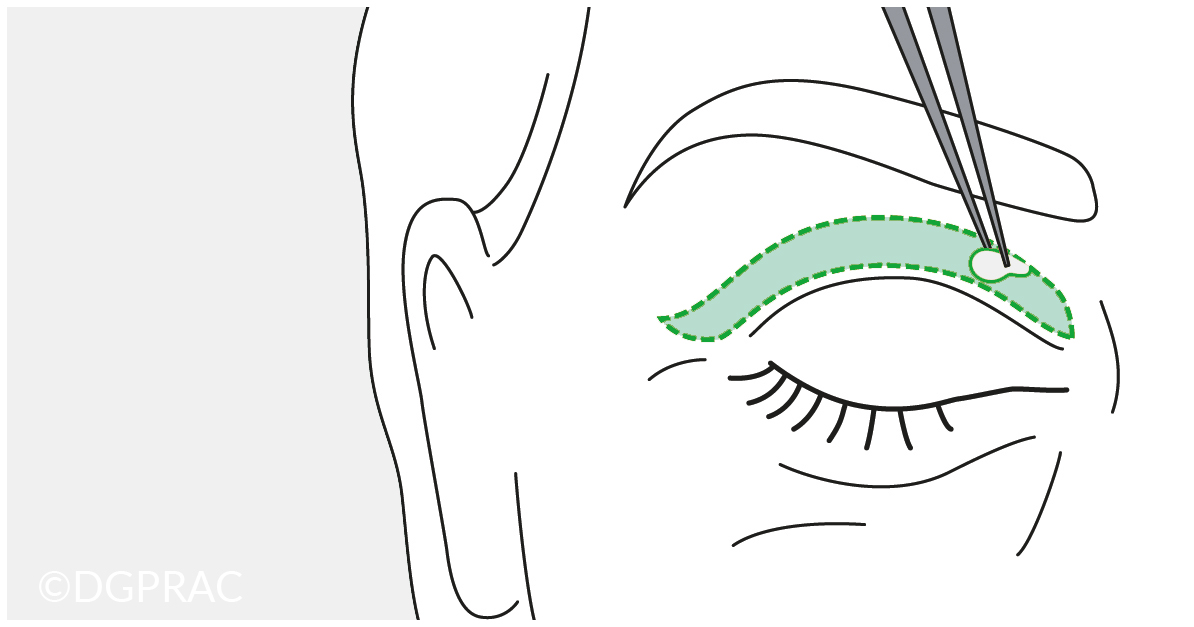
Medical illustration: the nasal fat pad of the upper lid
3. Fat pad: the fat pad near the nose that is removed in an upper lid tightening.
Medical illustration: incision on the lower lid
4. Lower lid: incision just below the lash line, excess skin removed.
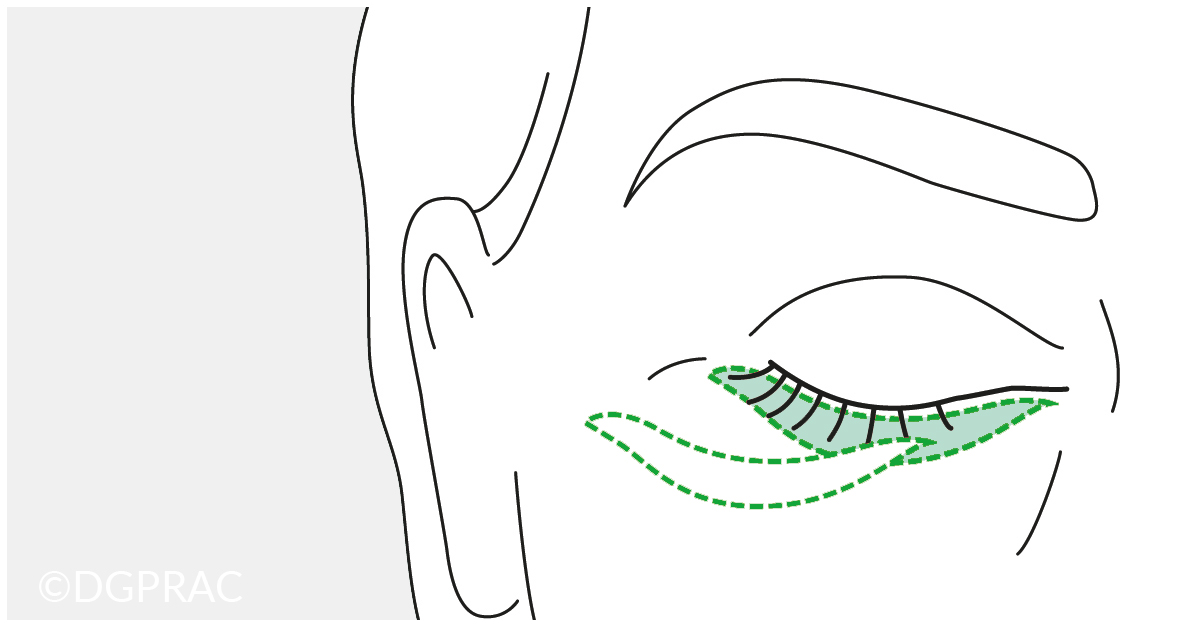
Medical illustration: scar course after eyelid surgery
5. Scar: the course after upper and lower lid tightening. Illustrations: DGPRÄC.
The procedure

What happens on the day

You are marked up sitting upright, with your eyes open and closed — how much skin is genuinely excess can only be judged in that position. The area is then numbed with local anaesthetic; you are awake and can follow what is happening.

Upper and lower lids together take about 90 minutes, one lid alone 45 to 60. Fine sutures close the incisions, and cooling starts immediately.

You rest at the practice for a while and go home the same day. We see you the very next morning for a wound check, and you have a number to call around the clock in the first days.

Healing

How the first week goes

Swelling and bruising are at their most obvious on days two and three, then fade quickly. Cooling in the first 48 hours makes a real difference. Sutures come out after about seven days.

Expect dry, gritty eyes and slightly blurred vision in the first days — the lids are swollen and blink less completely than usual. We send you home with lubricating drops.

Most people are presentable with make-up after a week to ten days. The scar is pink for a few months and then becomes very hard to find, particularly on the upper lid.

Costs

Will insurance pay for upper eyelid surgery?

Sometimes — and this is one of the few aesthetic procedures where that is genuinely true. If excess skin hangs far enough to restrict your field of vision, the operation is functional rather than cosmetic.

The proof required is an ophthalmologist's visual field test, once with the lid in its natural position and once with the skin taped up. If the difference is significant, an application to a German statutory insurer has a realistic chance. We provide the surgical report and photographs; your ophthalmologist provides the measurement.

Lower lid surgery is essentially always aesthetic and is paid privately. If you are insured outside Germany, check your policy before you travel — most international policies exclude both.

Safety

Risks specific to eyelid surgery

Possible complications include bleeding, infection, dry or irritated eyes, asymmetry, visible scars, altered sensation, difficulty closing the eye, lid malposition and the need for revision. Bleeding behind the eye is rare but can threaten vision; sudden severe pain, rapidly increasing swelling or impaired vision requires immediate emergency assessment.

At a glance

Eyelid surgery: the key facts

Key facts about eyelid surgery at Finke & Frantzen in Berlin
How long45–90 minutes – one lid 45 to 60, both about 90
AnaestheticLocal anaesthetic – you are awake
StayDay surgery – home the same day
SuturesOut after 7 days, wound check the next morning
Back to workAbout a week, presentable with make-up after 7–10 days
ScarUpper lid: in the natural crease. Lower lid: just below the lash line
WhereDay surgery at our practice, Heinrich-Roller-Straße 15, Berlin-Prenzlauer Berg
Paid byPrivate fee – upper lid possibly covered where the visual field is restricted

What does eyelid surgery cost? There is no flat rate. Time in theatre, technique, anaesthetic and the extent of the procedure differ from person to person. You get a binding quote at the end of your consultation — in writing, with nothing hidden.

Will insurance pay? As a rule, no: purely aesthetic procedures are paid privately. German statutory insurers only contribute where a medical indication is recognised; private insurers and international policies decide case by case. We will tell you honestly whether you have any prospect of cover. For the upper lid specifically, an ophthalmologist's visual field test can establish a functional indication. And the consultation itself? Medical advice is a treatment in its own right and is invoiced under the German scale of medical fees (GOÄ) — including when you decide against a procedure afterwards. We tell you what to expect when the appointment is made.

Preparing

How do I prepare?

  • Stop blood thinners such as aspirin or ibuprofen only after checking with us.
  • Give up nicotine for two weeks before and after the procedure – it is the single most useful thing you can do for your own wound healing.
  • Come without make-up and without jewellery; for procedures around the eyes, without contact lenses too.
  • Plan to get home without driving yourself. Even under local anaesthetic, having someone with you is easier.
  • Keep the first few days free of anything where you have to look your best.

These points apply generally. What applies in your case – with existing conditions or regular medication – we go through at your pre-operative consultation. That conversation is what counts.

Alternatives

What are the alternatives?

Not every tired-looking eye area needs an operation. We look first at whether something smaller would do the job – and we will say so if none of these procedures fits your finding.

  • Wrinkle treatment – botulinum toxin lifts the brow by a few millimetres and softens crow's feet – no incision, but only for months.
  • Thread lift – raises the outer brow with it; sensible while the excess of skin is still small.
  • Facelift – if it is not just the lids but the whole mid-face that has descended.
In men

Why a lid correction in men is planned differently

The technique is the same as in a woman — the measurement is not. Three differences drive the planning.

The brow sits lower. In men the eyebrow typically runs along or just below the bony orbital rim; in women it sits above it. Take too much skin from the upper lid and the brow travels upwards — and the face is feminised immediately. We therefore plan conservatively in men and would rather leave a millimetre standing.

The skin is thicker and better supplied with blood. Male skin has a sturdier dermis and more vessels. In practice that means slightly more bleeding during the procedure and slightly more swelling in the first days — but the scars are often less conspicuous, because thicker skin heals more finely.

Beard growth on the lower lid. Where an incision below the lash line runs into the beard, the placement is chosen so that shaving stays straightforward afterwards.

All of this is discussed in the practice's dedicated men's clinic — a consultation slot reserved for male patients, where the subject can be raised without an audience.

In safe hands

Your surgeons for eyelid surgery in Berlin

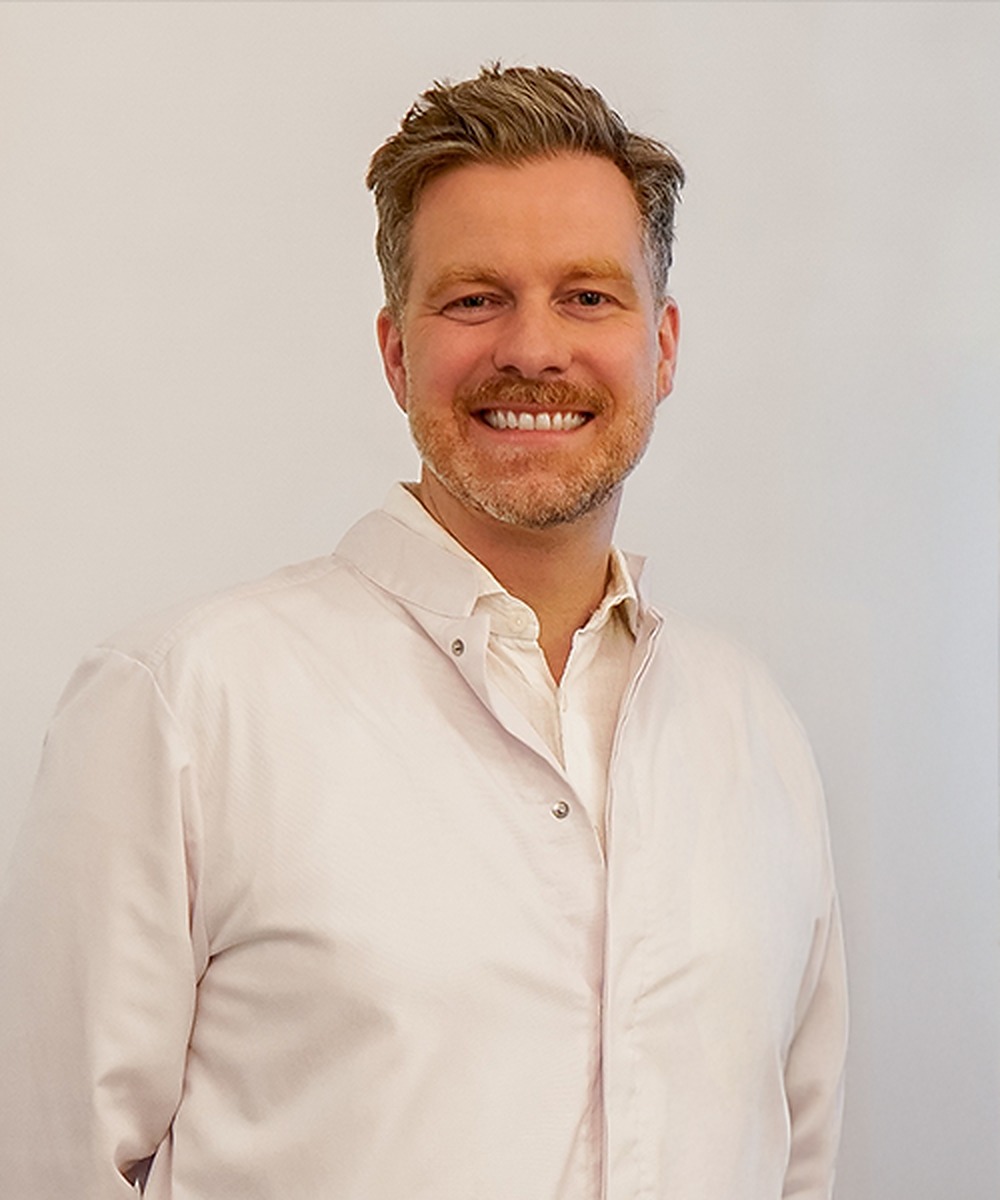
Portrait of Dr. Stephan Frantzen, board-certified plastic surgeon in Berlin

Dr. Stephan Frantzen

Board-certified plastic surgeon and
board-certified general surgeon

  • Head of department for plastic surgery, Helios Klinikum Berlin-Buch, 2015–2018
  • Board-certified in two specialties – general surgery and plastic surgery
  • Speaker on the “Full Face Approach” at the VDÄPC annual meeting
Portrait of Dr. Juliane C. Finke, board-certified plastic surgeon in Berlin

Dr. Juliane C. Finke

Board-certified plastic surgeon (plastic &
aesthetic surgery), Fellow of EBOPRAS

  • Fellow of EBOPRAS – European board examination, 2010
  • Facial treatments with an emphasis on natural, unforced results
  • Consultations in English and Spanish
Verifiable qualifications

Professional societies and awards

jameda award: patients rated Dr. Frantzen 1.0, highest recommendation for breast augmentation – open Dr. Frantzen's jameda profile jameda seal TOP 10 (01/2022): Dr. med. Juliane C. Finke, physicians for plastic & aesthetic operations in Berlin – open Dr. Finke's jameda profile

Dr. Juliane C. Finke and Dr. Stephan Frantzen are full members of the German Society of Plastic, Reconstructive and Aesthetic Surgeons (DGPRÄC) and the German Society of Senology (DGS). Dr. Finke is also a Fellow of EBOPRAS and passed the European board examination in 2010; Dr. Frantzen operates on a voluntary basis for INTERPLAST in South America. The jameda seals lead to the independent physician profiles with patient reviews of Dr. Finke and Dr. Frantzen.

Frequently asked questions

Frequently asked questions about eyelid surgery

Medically reviewed by Dr. Juliane C. Finke and Dr. Stephan Frantzen

01

Will it change my expression?

No, if the right amount is removed. That is precisely why we mark you sitting upright with your eyes open — the amount of genuinely excess skin cannot be judged lying down. Removing too much is what produces a surprised or staring look, and it is far easier to avoid than to correct.

02

Does it hurt?

The injection of local anaesthetic stings for a few seconds. After that you feel pressure and movement, not pain. Afterwards, ordinary painkillers are enough for almost everyone — most people describe it as tight rather than sore.

03

How long will I look bruised?

Most obvious on days two and three, largely gone by day seven to ten. Sunglasses cover a great deal in the meantime, and make-up is allowed once the sutures are out.

04

Can I read or work at a screen afterwards?

Reading from day two or three in short spells. Screen work is usually manageable after three or four days, but your eyes will be dry and will tire faster — use the lubricating drops liberally.

05

Can I wear contact lenses again?

After about two weeks, once the swelling has settled. Glasses from the start.

06

How long does the result last?

Many years — an upper lid correction commonly lasts ten to fifteen. The skin continues to age, but it starts again from a much better position.

07

Will my statutory insurance pay?

Possibly, for the upper lid, if an ophthalmologist's visual field test shows that the excess skin measurably restricts your vision. Lower lid surgery is aesthetic and is paid privately.

08

Can both lids be done at once?

Yes, and it is common — about 90 minutes in total, one recovery instead of two.

09

What are the risks?

Common and temporary: swelling, bruising, dry eyes, blurred vision for a few days. Less common: asymmetry, visible scarring, or on the lower lid a slight downward pull of the lid margin. Rare: infection, or an incomplete lid closure — which is why we err on the side of removing too little.

Your next step

Talk to us man to man

Book an appointment in the men's clinic. We mark you sitting upright, show you how much skin is genuinely excess, and tell you if the answer is less than you expected.

Related treatments: Wrinkle treatment · Thread lift · Facelift · Facial treatments · For women

Medically reviewed by Dr. Juliane C. Finke, board-certified plastic surgeon (plastic, reconstructive and aesthetic surgery), and Dr. Stephan Frantzen, board-certified plastic surgeon and board-certified general surgeon.
Last medically reviewed:
The content of this page is for general information and does not replace medical advice. A binding assessment is only possible after a personal examination.

Independent information: The German Society of Plastic, Reconstructive and Aesthetic Surgeons provides patient information on choosing a specialist, consent, limitations and possible complications. The German Medical Association explains the GOÄ fee schedule. These German-language sources supplement, but do not replace, an individual medical examination.

Call us Book an appointment