
For women · Facial treatments

Faceliftin Berlin-Prenzlauer Berg

A facelift does not stretch skin. It repositions the layer underneath — the one that actually holds the face up. That distinction is the whole reason the result lasts years rather than months.

Please note: A medical consultation is a chargeable service under the German physicians’ fee schedule (GOÄ). Online bookings are binding; the practice team will explain the expected consultation fee when arranging your appointment.

Medically reviewed by Dr. med. Juliane C. Finke and Dr. med. Stephan Frantzen · Board-certified plastic surgeons · Last reviewed:

Facelift in Berlin – consultation at Finke & Frantzen
1–4 hours in theatre, depending on extent – a small lift takes about an hour
1–3 days in hospital at the MEOCLINIC, twilight sedation or general anaesthetic
about 4 days off work; two to four weeks to feel fully yourself again
1 · 3 · 6 · 12 months – review appointments after the operation
The principle

Skin lift or SMAS lift — the difference that matters

A facelift is an operation that lifts and re-secures not only the skin but the fibrous and muscular layer beneath it — the superficial musculoaponeurotic system, or SMAS. This layer carries the weight of the face; the skin only covers it.

Picture a mattress with a fitted sheet. If the mattress sags, pulling the sheet tighter makes it look better for a while, but the sheet stretches back and the mattress still sags. That is a pure skin lift: quick, cheap, and visibly gone within a year or two — often with the tell-tale over-tightened look that people rightly dislike.

Lifting the SMAS moves the weight-bearing layer back where it belongs and fixes it there. The skin is then re-draped over it without tension. That is why the result lasts, and it is also why it looks natural: the skin is not what is holding anything up.

Areas

A facelift is not always the whole face

Which regions are treated is decided by the finding, not by the name. In practice these are the parts that can be lifted alone or in combination:

  • Mid-face and cheek – for a cheek fat pad that has descended and a deepening fold from nose to mouth.
  • Lower face and jawline – the most common request; restores a defined line between face and neck.
  • Neck – often the part that bothers people most. Where the platysma muscle bands have separated, they are brought back together.
  • Forehead and brow – lifts a heavy brow and opens the eye region; sometimes makes eyelid surgery unnecessary.
  • Chin – small volume corrections that improve the profile more than expected.

A smaller, targeted lift often achieves more than a large one done reluctantly. We will say when one region alone will do — a mini lift of an hour is a real option, not a consolation prize.

The operation

How the operation goes

Depending on the extent, the operation is performed under twilight sedation or general anaesthetic and takes between one and four hours. The incision runs in front of the ear, around the earlobe and into the hairline behind — placed along natural borders so the scar hides where the skin already changes.

The skin is lifted, the SMAS layer is repositioned and secured with sutures, excess skin is removed without tension, and the incisions are closed. Small drains are common and come out after a day.

You stay one to three nights at the MEOCLINIC. The head dressing comes off the following morning, and most patients are surprised that the discomfort is more tightness than pain.

From consultation to aftercare

How your facelift proceeds

01

Consultation & planning

We examine which regions should be tightened and discuss openly what can be achieved. Sometimes other techniques are better suited to a radiant overall result – such as fat grafting or eyelid surgery. If the specialist advises against it, he or she says so.

02

The procedure

Depending on its extent, the operation takes up to four hours; smaller facelifts are possible in around an hour. It is usually performed under sedation or general anaesthetic, with the incision hidden behind the hairline.

03

Hospital stay

After the operation you are first cared for as an inpatient at the MEOCLINIC – expect a stay of one to three days. Depending on the extent, a padded dressing is applied for one to two days.

04

Aftercare

Regular check-ups take place at the practice. For questions outside consultation hours you receive an emergency number on which you can always reach your surgeon. Follow-up checks are recommended after 1, 3, 6 and 12 months.

Healing

What the first weeks look like

Honest timeline, because this is where expectations go wrong:

  • Days 1–3 – swelling and bruising increase, peaking around day three. You will not look better yet.
  • Days 4–7 – bruising turns yellow, swelling starts to fall. Sutures in front of the ear come out around day seven.
  • Weeks 2–3 – presentable with make-up; most people go back to work after about four days for desk work, longer if they meet clients.
  • Weeks 4–8 – residual swelling settles, numbness in front of the ear improves.
  • Months 3–6 – the final result. Numbness can persist for months and almost always resolves.

We see you at one, three, six and twelve months. Those appointments are part of the treatment, not extras.

Durability

How long does a facelift last?

Eight to twelve years is the usual figure for a properly performed SMAS lift, and many patients get more. What it does not do is stop ageing: your face continues to change from the new starting point, just as it would have from the old one.

What shortens it: smoking, marked weight fluctuation, unprotected sun. What extends it: none of those, plus small maintenance measures — a little volume or a thread lift a few years later — rather than waiting for a second operation.

Risks

What can go wrong?

Common and temporary: swelling, bruising, tightness, numbness of the skin in front of the ear that can last several months.

Less common: haematoma requiring drainage — the most frequent early complication and the reason for the overnight stay; wound healing problems, greatly more likely in smokers; widened or visible scarring; temporary hair loss around the incision in the temple.

Rare: injury to a branch of the facial nerve, causing weakness of part of the face. In the great majority of reported cases this is temporary. It is the risk patients ask about most, and we go through it properly rather than glossing over it.

At a glance

Facelift: the key facts

Key facts about a facelift at Finke & Frantzen in Berlin
How long1–4 hours in theatre, depending on extent
AnaestheticTwilight sedation or general anaesthetic
Stay1–3 nights as an inpatient
Back to workAbout 4 days for desk work; 2–4 weeks to feel fully yourself
ScarIn front of the ear, around the earlobe and into the hairline behind
Follow-upReviews at 1, 3, 6 and 12 months, included
LastsTypically 8–12 years
WhereConsultation and aftercare at our practice in Berlin-Prenzlauer Berg, the operation as an inpatient at the MEOCLINIC, Friedrichstraße 71 (private hospital in Quartier 206)
Paid byPrivate fee or private insurance benefit

What does a facelift cost? There is no flat rate. Time in theatre, technique, anaesthetic and the extent of the procedure differ from person to person. You get a binding quote at the end of your consultation — in writing, with nothing hidden. And the consultation itself? Medical advice is a treatment in its own right and is invoiced under the German scale of medical fees (GOÄ) — including when you decide against a procedure afterwards. We tell you what to expect when the appointment is made.

Will insurance pay? As a rule, no: purely aesthetic procedures are paid privately. German statutory insurers only contribute where a medical indication is recognised; private insurers and international policies decide case by case. We will tell you honestly whether you have any prospect of cover.

Preparing

How do I prepare?

  • Stop blood thinners – aspirin, warfarin, ibuprofen – only after checking with us and your GP, usually ten to fourteen days beforehand.
  • Give up nicotine for two to four weeks before and after surgery. Smoking narrows the small skin vessels and is by far the most common cause of wound healing problems.
  • Come fasted on the day: nothing to eat for six hours, nothing to drink for two.
  • Arrange someone to take you home and, ideally, to stay the first night. No driving for 24 hours after a general anaesthetic.
  • Get things ready in advance: clothes that open at the front, the compression garment we agreed on, and enough food in for a few days.

These points apply generally. What applies in your case – with existing conditions or regular medication – we go through at your pre-operative consultation. That conversation is what counts.

Alternatives

What are the alternatives?

A facelift is the largest step, and it is not always the first one. We look first at whether something smaller would do the job – and we will say so if none of these procedures fits your finding.

  • Thread lift – no incision, effective while the excess of skin is still small – six to eighteen months.
  • FaceTite – tightens from beneath with radiofrequency – the stage between threads and surgery.
  • Wrinkle treatment – for individual lines and lost volume, where the contour itself is still in place.
In safe hands

Your surgeons for a facelift in Berlin

Portrait of Dr. Juliane C. Finke, board-certified plastic surgeon in Berlin

Dr. Juliane C. Finke

Board-certified plastic surgeon (plastic &
aesthetic surgery), Fellow of EBOPRAS

  • Fellow of EBOPRAS – European board examination, 2010
  • Facial surgery with an emphasis on natural, unforced results
  • Consultations in English and Spanish
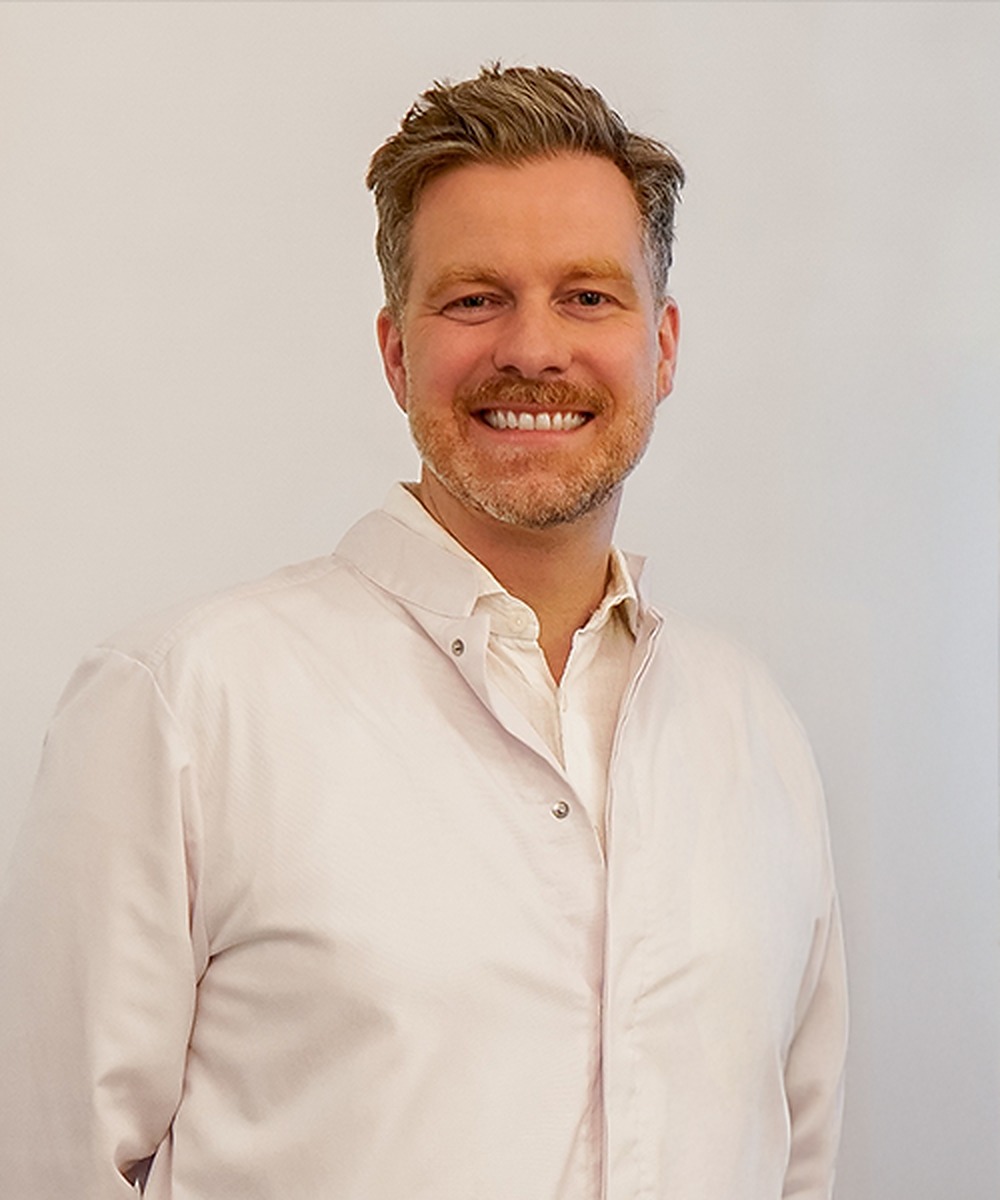
Portrait of Dr. Stephan Frantzen, board-certified plastic surgeon in Berlin

Dr. Stephan Frantzen

Board-certified plastic surgeon and
board-certified general surgeon

  • Head of department for plastic surgery, Helios Klinikum Berlin-Buch, 2015–2018
  • Speaker on the “Full Face Approach” at the VDÄPC annual meeting
  • Board-certified in two specialties – general surgery and plastic surgery
Verifiable qualifications

Professional societies and awards

jameda award: patients rated Dr. Frantzen 1.0, highest recommendation for breast augmentation – open Dr. Frantzen's jameda profile jameda seal TOP 10 (01/2022): Dr. med. Juliane C. Finke, physicians for plastic & aesthetic operations in Berlin – open Dr. Finke's jameda profile

Dr. Juliane C. Finke and Dr. Stephan Frantzen are full members of the German Society of Plastic, Reconstructive and Aesthetic Surgeons (DGPRÄC) and the German Society of Senology (DGS). Dr. Finke is also a Fellow of EBOPRAS and passed the European board examination in 2010; Dr. Frantzen operates on a voluntary basis for INTERPLAST in South America. The jameda seals lead to the independent physician profiles with patient reviews of Dr. Finke and Dr. Frantzen.

Frequently asked questions

Frequently asked questions about facelifts

Medically reviewed by Dr. Juliane C. Finke and Dr. Stephan Frantzen

01

Will I look like a different person?

No — and if that is what you want, we are the wrong practice. A properly executed SMAS lift puts your own tissue back where it used to be. The comment patients report most often is that people ask whether they have been on holiday.

02

How old should I be?

There is no right age. What matters is the finding: enough descent for a lift to have something to reposition, and skin with enough quality to re-drape. Most patients are between 45 and 65, but we have operated outside that range in both directions.

03

What is a mini facelift?

A lift limited to one region, usually the lower face and jawline, through a shorter incision. It takes about an hour, the recovery is quicker, and for the right finding it is genuinely enough. For a face that has descended broadly, it is not — and we will say so.

04

Where exactly will the scar be?

In the crease in front of the ear, around the earlobe, and up into the hairline behind. Those are all borders where the skin naturally changes, which is why the scar becomes hard to find once it has faded.

05

Can I combine it with eyelid surgery?

Yes, and it is a common combination — the eye region is often what makes a face look tired even after the lower face has been lifted. One anaesthetic, one recovery.

06

When can I wash my hair?

From about day three, gently and with lukewarm water. No hairdryer on hot, no colouring for four weeks.

07

Will it help my neck?

If the neck is included, yes — and it is often the region patients are happiest about. Where the platysma muscle bands have separated, they are brought back together in the same operation.

08

How long before I can exercise?

Walking straight away, gentle cardio after two to three weeks, and anything that raises blood pressure sharply — heavy lifting, hot yoga, sauna — after four to six weeks.

09

Where does the operation take place?

Consultation and aftercare at our practice in Berlin-Prenzlauer Berg. The operation is performed as an inpatient at the MEOCLINIC, Friedrichstraße 71 — the private hospital in Quartier 206.

Your next step

Let’s look at your face together

Book a personal consultation. We show you what a lift can reposition — and what it cannot, so nothing about the result surprises you afterwards.

Related treatments: Thread lift · FaceTite · Eyelid surgery · Facial treatments

Medically reviewed by Dr. Juliane C. Finke, board-certified plastic surgeon (plastic and aesthetic surgery), and Dr. Stephan Frantzen, board-certified plastic surgeon and board-certified general surgeon.
Last medically reviewed:
The content of this page is for general information and does not replace medical advice. A binding assessment is only possible after a personal examination.

Independent information: The German Society of Plastic, Reconstructive and Aesthetic Surgeons provides patient information on choosing a specialist, consent, limitations and possible complications. The German Medical Association explains the GOÄ fee schedule. These German-language sources supplement, but do not replace, an individual medical examination.

Call us Book an appointment