
Finke & Frantzen · Berlin
Hyaluronic acid cheek fillersConsultation in Berlin-Prenzlauer Berg
Cheek volume shapes the transitions across the face. Where volume has been lost or a change in contour is desired, hyaluronic acid may be an option. What matters is what suits your face, rather than a prescribed beauty ideal.
Medical consultations are subject to a fee. Treatment costs are discussed individually during your consultation.


ConsultationPersonal and open-ended
IndividualPlanning based on assessment
TransparentOptions and risks
BerlinPractice in Prenzlauer Berg
Cheek augmentation: more volume does not automatically mean more definition
Cheek fillers add volume to the midface and may change a hollow area or visible contour. They do not remove skin or automatically make an already full face narrower. Assessment therefore distinguishes your natural facial shape, actual changes and the result you would like.
Adding volume while respecting your features
Bone, fat, skin and their relationships shape the cheeks. Changes in these structures can affect contour over time. Cheek filler is used to add fullness to selected areas. It cannot alter the underlying bone shape or remove excess skin.
At Finke & Frantzen in Berlin-Prenzlauer Berg, assessment goes beyond isolated points on the cheeks. Transitions towards the eyes, nose and lower face also matter. A modest adjustment may be more appropriate than substantial added volume. Choosing not to have treatment remains a valid option.
Restoring fullness or changing your shape?
Both are often called cheek augmentation, but they are not the same. Someone whose cheeks used to be fuller may want to address a change. Someone with a naturally narrow midface may want a new contour. A useful starting question is therefore what has changed and what has always been part of your face.
Older, preferably unedited photographs can help illustrate this distinction during consultation. They are not a prescribed target and do not replace examination. Lighting, camera angle and expression affect how prominent cheeks look in pictures.
Also describe what you do not want: more width from the front, a stronger lateral contour or a different expression when smiling. A natural impression does not follow simply from using a small amount. The change needs to suit your face as a whole.
Four concerns that need to be distinguished
| Your concern | What the examination considers |
|---|---|
| Cheeks look less full than before | Changes in volume and soft tissues, taking existing contour and previous treatments into account. |
| More prominent cheekbones | The desired shape change balanced against possible added width; filler does not change the bone itself. |
| Nasolabial folds are the main concern | Assess the fold separately. Cheek treatment does not promise a reliable indirect lift. |
| A less clearly defined jawline | Distinguish volume, tissue descent and chin-jaw contour. Cheek augmentation is not a universal solution. |
Understanding your starting point
A narrow cheek area does not necessarily mean volume has been lost. Your natural facial shape, skin quality and changes over time are considered during examination. Where laxity is pronounced, injections have limitations. Other procedures are not routine additions and need separate assessment.
Please disclose earlier fillers and procedures, including those performed some time ago. Illnesses, allergies and medicines are equally important. Never stop prescribed medication on your own. Infection in the treatment area is a reason not to inject. Aesthetic fillers are not used during pregnancy; breastfeeding must also be discussed beforehand.
Why the cheeks cannot be assessed in isolation
The front of the cheek and the lateral cheekbone contour influence different views. Wanting more prominent cheekbones is therefore not automatically the same as wanting less hollow cheeks. Assessment at rest and in movement helps establish which region, if any, is appropriate to treat.
Neighbouring areas matter too. An under-eye shadow, a nasolabial fold and a softer jawline are separate concerns. Cheek filler is not a universal treatment for all of them. Any additional area needs its own findings and balance of benefits and risks.
Where fullness is already present, more volume can make the face look broader or heavier rather than more defined. With marked tissue descent, filler limitations need to be clear. A consultation may therefore lead to a recommendation not to have cheek augmentation.
From consultation to treatment

After examination, we discuss what change may be realistic and where limitations lie. The choice of material, injection sites and technique follows your individual findings. The amount of filler is planned individually after examination. Perfect symmetry cannot be guaranteed.
The skin is cleansed and disinfected before filler is introduced. Pressure, needle discomfort or stinging can occur. Suitable pain relief is discussed beforehand. You should also understand the difference between expected early effects and symptoms that require medical attention.
Understanding cheek volume
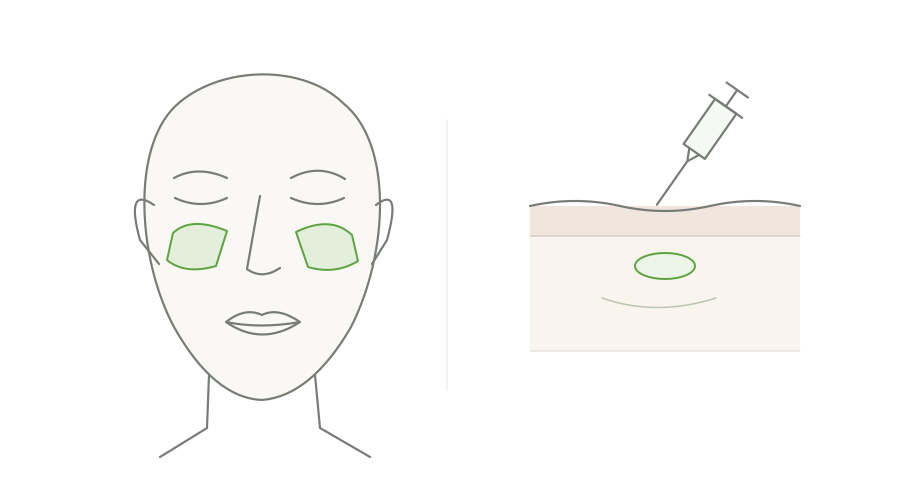
- Cheek region
- Individual planning
- Filler within tissue
From planning to follow-up
Assess the whole face
The cheeks and transitions towards neighbouring facial areas are examined.
Treat individually
The planned filler is introduced after cleansing and disinfection.
Review the contour
Assessment takes swelling and individual progress into account.
What product choice and studies can tell you
Hyaluronic acid fillers are not all identical. Selection considers the intended use, existing tissues and desired change, among other factors. A familiar name or a “premium” label does not replace that rationale. Ask which material is proposed and why it is considered suitable for you.
A 2021 randomised study by Jones and colleagues compared two hyaluronic acid fillers in 210 participants. It assessed midface fullness twelve weeks after the last injection, not perfect symmetry. The tested product met the study’s non-inferiority criterion against the comparator filler. This was not a comparison with no treatment, nor a guarantee of your result. An additional treatment at four weeks was permitted in the study, so this time point does not necessarily describe the course after a single appointment.
Study follow-up and personal durability are also different. An assessment after a number of months is first of all a measurement time point. Whether further treatment is useful depends on your current findings, not on a duration stated in a study or advertisement.
Contour, swelling and further decisions
The two sides may initially swell differently. Your first look in the mirror is therefore not a final assessment of contour. Immediate additional injections based only on this early appearance are not a general recommendation.
Follow the individual advice on touching the area, exercise, heat and cosmetics. Do not massage it yourself unless specifically advised. Effects and recovery vary, and no fixed duration is guaranteed. Further treatment should depend on examination rather than an automatically recurring appointment.
Review involves more than the photograph taken straight afterwards
Consider more than one view. Discuss how you perceive the contour from the front, from the side and when smiling. Mention tenderness, a palpable area that bothers you or any unexpected change. A review is intended to clarify these issues, not automatically add volume.
Before repeat treatment, review the full history: the dates, products and extent of previous injections where known, plus facial operations and other procedures. Unknown material or new symptoms call for examination first. Correcting existing filler is not a universally risk-free fresh start.
For your appointment in Berlin-Prenzlauer Berg, note three things: what you would like to change, what you wish to keep and what treatments you have had. At Heinrich-Roller-Straße 15, we discuss an individual plan including limitations, aftercare and costs. A paid consultation does not commit you to treatment.

Safety matters even for a subtle change
Risks include pain, swelling, bruising, irregularities, asymmetry and infection. Inflammatory reactions may develop later. Rare vessel blockage can damage tissue; facial injections can also cause serious visual disturbances, including loss of vision.
Severe or increasing pain and unusually pale or mottled skin require immediate medical assessment. For visual disturbances or neurological symptoms, call 112 immediately. Do not wait for the next consultation. Personal informed consent covers these and other risks before you decide.
Further information
These pages explain other procedures and related concerns. They are not automatically alternative treatments for the same condition.
Finke & Frantzen
Your contacts in Berlin
Dr. med. Juliane C. Finke and Dr. med. Stephan Frantzen lead the Finke & Frantzen practice in Berlin. Read about their professional backgrounds here. Responsibility for your particular treatment is clarified when arranging your care.
Dr. med. Stephan Frantzen
View profileFrequently asked questions
Can cheek filler replace a facelift?
No. Filler adds volume but does not remove excess skin or reposition tissues in the same way as surgery. Its limitations need open discussion when laxity is substantial.
Will my cheeks always look wider?
The change depends on your original shape and treatment. Added volume can also create unwanted width. This is why the aim and limitations are discussed carefully beforehand.
Will it remove nasolabial folds?
That cannot be promised. Cheeks and nasolabial folds are considered together, but treating the cheeks does not automatically replace a separate assessment of the fold.
How much does cheek augmentation cost?
Costs are calculated individually after examination and planning. The medical consultation also carries a fee. A standard price or filler quantity would not be meaningful without assessing you.
Are hollow cheeks always due to ageing?
No. A narrow cheek shape may have been present for a long time. What matters is whether and how your face has changed. New, unexplained or one-sided changes should be assessed medically before aesthetic planning.
How much filler is needed on each side?
A fixed amount cannot be meaningfully chosen without examination. The two sides are not necessarily anatomically identical either. Material, starting point and goals guide planning; more is not a measure of quality.
Can this make my face narrower?
Filler adds volume and does not remove tissue. It may change how a contour is perceived, but cannot reliably promise a smaller or narrower face. If reduced width is your main goal, discuss it explicitly.
Is this the same as treating tear troughs?
No. The cheek and under-eye region are adjacent but have different anatomy and risks. Suitability for cheek filler does not automatically establish suitability for another injection under the eyes.
What if one side looks fuller afterwards?
Early swelling needs to be distinguished from a persistent difference. Arrange an assessment rather than adding more solely because of an early photograph. Severe pain, unusual skin colour or visual symptoms require immediate help.
Can everything simply be reversed if I dislike it?
That cannot be promised in every case. Whether and how material can be corrected or reduced depends on the findings and has risks of its own. Discuss limits and potential corrections before deciding.
Let us discuss your concerns
At Heinrich-Roller-Straße 15, 10405 Berlin, we discuss options, limitations and alternatives. Treatment decisions follow personal assessment and informed consent.
Medical consultations are subject to a fee. Treatment costs are discussed individually during your consultation.
Sources and context
Editorial review: 7 October 2026. Practice information was checked against existing pages. The study concerns particular products and selected participants; it is not evidence that the practice uses those products or a prediction of personal results. FDA information provides general safety context, not a German authorisation claim. This information does not replace an individual medical consultation and examination.